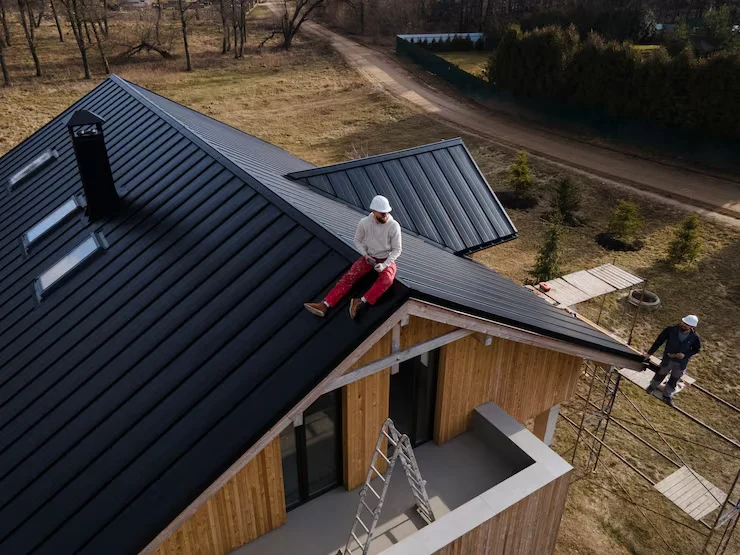
If a storm has just passed and you see wires down, a sagging ceiling or a tree resting on the house, stop here. Keep everyone out of the damaged rooms, stay well away from fallen lines, and call 911 or the power utility first. Records can wait. People cannot.
Once everyone is safe, this guide covers how to document roof damage for insurance without setting foot on a ladder. You will find what to photograph from the yard and from inside, which dates and names to write down, which receipts to keep, and how Florida’s claim timelines fit around all of it.
The facts below come from Ready.gov, FEMA, the National Association of Insurance Commissioners (NAIC) and two Florida statutes, each linked where it is used. Nothing here is a promise about your policy. Coverage depends on your own policy wording, so confirm every point with your insurer, and speak with an attorney if a claim is disputed.
Safety Comes Before Any Photo
Your first job after a storm is keeping people safe, not taking pictures. Ready.gov warns not to touch wet electrical equipment, notes that downed lines can charge standing water, and advises against climbing into a closed attic during flooding. Roof damage should be recorded from the ground and from safe rooms inside only.
Ready.gov’s hurricane page also says people with asthma, lung conditions or weakened immune systems should not enter buildings with indoor leaks or mold they can see or smell (Ready.gov). If a room is wet, stained or smells musty, photograph it from the doorway or leave it for a professional.
Nothing in this guide asks you to climb onto the roof, lean out of a window or enter the attic during a storm. A wet roof is slippery, storm damage can hide weak decking, and a fall turns a property claim into a medical emergency. If you cannot see an area safely from the ground, leave it for a roofer or the insurance adjuster.
Photos That Document Roof Damage for an Insurance Claim
Photograph the roof from every side of the house, standing on the ground, before anything is cleaned up or repaired. FEMA advises taking photos of damage before clean-up begins and covering both the outside and the inside of the building. Wide shots first, then closer zoom shots of anything that looks wrong.
FEMA’s guidance says to take photos before you begin clean-up and to save repair receipts (FEMA). A simple order makes the set easier to follow later.
- Each side of the house. Stand far enough back to fit the whole roof slope in one frame, front, back and both sides.
- Zoomed shots. Use your phone’s zoom on missing, lifted or creased shingles, bent flashing, and loose ridge pieces.
- The yard and driveway. Shingle pieces, granules washed out of downspouts and branches on the ground all help show what came off the roof.
- Gutters and fascia. Dents, sagging runs and pulled brackets are visible from below.
- Trees and limbs. Any limb touching the roof, and the broken stump or trunk it came from.
- Short video. A slow walk around the house, narrating what you see, ties the photos together.
Our article on wind damage signs on Lakeland roofs explains what lifted, creased and missing shingles look like from the yard, which helps you know what to point the camera at.
Photos to Take Inside the House
Water damage inside the home is often the clearest record of a roof problem. Photograph ceiling stains, drips, wet insulation that has fallen, damaged walls, and soaked flooring, room by room. FEMA advises labelling photos and videos by room before removing anything, so the adjuster can match each image to a place.
Go room by room and take one wide photo of each damaged room, then close shots of each stain or drip. If water is actively coming through, photograph the bucket or towel catching it. Then step out of that room if the ceiling is sagging or the area is near lights, outlets or fans.
FEMA’s guidance on damaged items lists four steps before items are removed: take photos and videos, record serial numbers, keep receipts, and contact repair services (FEMA). That applies to anything the water reached, such as a television, a mattress or a rug under a leak.
FEMA also advises separating damaged items from undamaged ones and notes that an adjuster will need to see damaged items during an inspection (FEMA). Move soaked belongings out of the way if it is safe, but do not throw them out until your insurer tells you it is fine to do so.
Dates, Names and Notes to Write Down
A written log turns a pile of photos into a clear story of what happened and when. Record the date and time of the storm, when you first saw the damage, when you called your insurer, every claim number, and the name of each person you speak with, along with what they said.
Keep the log in one place, either a notebook or a note on your phone, and add to it the same day. A simple table works well.
| Entry | What to record |
|---|---|
| Storm date | The day and rough time the weather hit |
| Damage found | When and where you first noticed it |
| Calls and emails | Date, person’s name, company, what was said |
| Claim number | As soon as the insurer gives you one |
| Visits | Date and name of any adjuster, inspector or roofer |
| Spending | Every receipt linked to the damage |
Florida law puts many of these same records on the insurer’s side. Section 627.70131 of the Florida Statutes requires insurers to keep claim records with dates, including communications, proof-of-loss receipt, inspections, estimates and payment or denial, and a log of each adjuster who talks with the policyholder (Fla. Stat. s. 627.70131). Your own log lets you compare notes if dates are ever in question.
Receipts and Temporary Repairs
Keep every receipt connected to the damage, from a tarp service to a hotel night. FEMA advises saving all repair receipts. Before any emergency work begins, photograph the damage first, so the record shows the roof as the storm left it, not as the repair crew left it.
Covering a damaged roof is a job for a professional, not a homeowner on a ladder. A roofer can place a tarp or temporary cover, and you can record the work from the ground before and after. Ask for a written invoice that lists the date, the address and the work done.
Policies often set out what a homeowner must do to stop further damage after a loss. The sources used here do not set out what any single policy says, so read the section of your own policy on protecting property after a loss, and ask your insurer before you approve anything beyond an emergency cover.
Permanent repairs are a separate question. Talk to your insurer before agreeing to a full roof repair or replacement, so the adjuster has a chance to see the damage first.
Records Worth Keeping Before Any Storm
The easiest claim records are the ones made before anything goes wrong. Dated photos of each side of a healthy roof, past repair invoices, the roof’s installation date and a home inventory give your insurer a baseline to compare against. They also show the roof’s condition before the storm.
The NAIC offers a free Home Inventory app that lets you photograph belongings, group them by room and export the inventory at any time (NAIC). The NAIC says an accurate home inventory gives your insurance company the information it needs to help settle claims.
For the roof itself, a short folder is enough.
- Before photos. One wide shot of each roof slope from the ground, taken on a clear day each year.
- Installation records. The permit, invoice or warranty card showing when the roof went on.
- Repair history. Every invoice for past roof work.
- Policy copy. The current declarations page and policy, including any separate hurricane deductible terms.
Polk County has seen why this matters. The National Weather Service recorded 8.93 inches of rain at Lakeland Linder International Airport in one day during Hurricane Milton in 2024 (NWS Tampa Bay). Store copies away from the house, such as in cloud storage or with a family member. If the house is damaged, paper records inside it may be damaged too.
Reporting the Claim and Florida Time Limits
Report roof damage to your insurer as soon as you safely can. FEMA advises reporting hurricane damage to your insurance company as soon as possible, and Ready.gov says to contact your insurer for help. Florida law also sets outer deadlines, so waiting is never an advantage when the damage is already clear.
Section 627.70132 of the Florida Statutes says notice of a property insurance claim, or of a reopened claim, must be given to the insurer within one year after the date of loss, and notice of a supplemental claim within 18 months (Fla. Stat. s. 627.70132). Our article on roof insurance claim deadlines in Florida covers these limits in more detail.
Florida law also sets timelines for insurers. Section 627.70131 says an insurer must acknowledge a claim communication within 7 calendar days, begin its investigation within 7 days of receiving proof-of-loss statements, carry out any physical inspection within 30 days of receiving them, and pay or deny the claim within 60 days of notice, subject to exceptions for factors beyond its control (Fla. Stat. s. 627.70131).
Write each of those dates into your log as they happen. Statutes change, so confirm the current rules and your own policy terms with your insurer, and speak with an attorney if you think a deadline has been missed.
Getting a Roofer’s Report Alongside Your Photos
Your photos show what you could see from the ground. A roofer’s inspection report adds what can only be seen up close, such as cracked shingles, lifted nails and damaged flashing. Together they give the adjuster a fuller picture, and the roofer does the climbing so you never have to.
The Roof Repair Lakeland FL page on storm damage roof repair in Lakeland explains how a storm inspection works and what it covers. Ask any roofer for a written report with dated photos, and keep a copy with the rest of your records.
Whether the damage is covered is a different question from whether it is recorded well. Our guide on whether homeowners insurance covers a roof leak in Florida explains how policies tend to treat sudden storm damage compared with wear and tear. For the wider picture of seasonal checks and storm preparation, see our year-round roof care guide for Lakeland.
A Simple Checklist to Keep on Your Phone
A short checklist saves time when a storm has just passed and stress is high. Save it now so it is ready. Every step can be done from the ground or from a safe room inside, and none of it requires climbing, cutting or handling wet electrical equipment of any kind.
- Safety first. Keep people out of damaged rooms and away from downed lines. Call 911 or the utility if needed.
- Outside photos. Each side of the roof from the ground, then zoomed shots, then debris in the yard.
- Inside photos. Room by room, labelled, with close shots of stains and drips.
- Damaged items. Photos, videos and serial numbers before anything is moved out.
- Start the log. Storm date, damage found, first call to the insurer.
- Report the claim. Write down the claim number and the name of the person you spoke with.
- Emergency cover. Have a professional tarp the roof, and keep the invoice.
- Back up everything. Copy photos and records off your phone to cloud storage.
Frequently Asked Questions
What qualifies as roof damage for insurance?
That depends on your own policy wording, which defines the causes it covers and the ones it excludes. Good records help either way: photos from the ground and inside, labelled by room, plus dates and receipts, as FEMA advises (FEMA). Our guide on roof leak coverage in Florida covers how policies tend to treat storm damage. Confirm with your insurer.
Should I report roof damage to insurance?
FEMA advises reporting hurricane damage to your insurance company as soon as possible (FEMA), and Ready.gov says to photograph damage and contact your insurer (Ready.gov). Whether a claim makes sense for small damage is a question for your agent, who can explain your deductible and policy terms.
What not to say to insurance adjuster about roof?
The sources used here do not give a list of words to avoid. Stick to what you saw and when, using your photos and log, and avoid guessing at causes or dates you do not know. Insurers must keep a log of each adjuster who speaks with you under s. 627.70131 (Fla. Stat. s. 627.70131). For legal advice on a disputed claim, speak with an attorney.
How long do I have to file an insurance claim for roof damage?
Section 627.70132 of the Florida Statutes says notice of a claim or reopened claim must be given within one year after the date of loss, and notice of a supplemental claim within 18 months (Fla. Stat. s. 627.70132). Statutes change, so confirm the current deadline with your insurer or an attorney.
Will my insurance go up if I file a claim for roof damage?
The sources used here do not say how a roof claim affects future premiums. Rating rules vary by insurer and policy, so ask your agent or insurer directly before you file, and write down the answer and the name of the person who gave it in your claim log.
What not to say during a home insurance claim?
No source used here sets out phrases to avoid. Give clear facts backed by dated photos and notes, and keep copies of everything you send. FEMA advises photographing damage before clean-up and saving repair receipts (FEMA). If you are unsure how to answer a question about your claim, ask for it in writing or speak with an attorney.