
Call Us
(863) 304-9132
Roof leaks and storm damage
Tell us what you are seeing
Bartow and Polk County
Roof work across the city
Bartow has the oldest roofs in the county and the least forgiving ones to repair. The median home here was built in 1976, and 41.4% of the city’s 7,635 homes predate 1970, with 16.3% going up in the 1950s alone. That is a housing stock on its second or third covering, over decking cut when a three-tab shingle counted as long-life. The leaks that start these calls are rarely in the field of shingles. They sit at the things that penetrate an old roof: the chimney, the wall where an addition was tied in, the vent stack, the fascia that has been wet for years. Roofing in Bartow is mostly a detail-and-deck problem wearing a shingle roof.
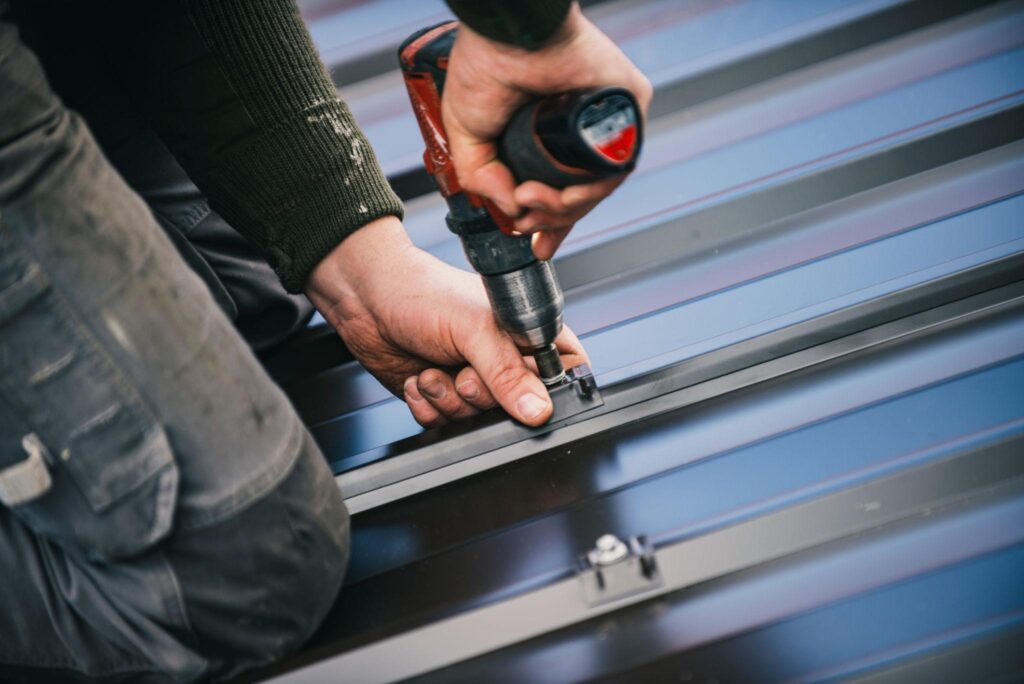
Homes in Bartow, FL
Setting and elevation in Bartow
Bartow sits at about 118 feet above sea level, the lowest of the Polk County cities we work in, and the ground around it drains slowly toward the Peace River country south of town. The city covers 46.5 square miles of land with 6.4 square miles of water inside it, so the shoreline is spread out and the water table sits close to the surface in places. On a roof, low elevation and flat ground combine into one practical fact: water leaves the surface and then has nowhere to go quickly. Gutters, downspouts and the fascia behind them carry more of the load here than they would on a slope, and ponding on a low porch roof is a drainage problem before it is a roofing problem.
When Bartow’s roofs went on
Bartow’s median build year is 1976, and the era spread is weighted heavily to the past. Homes from 1950 to 1959 make up 16.3% of the stock, the 1970s add 14.2%, the 1980s 12.7% and the 1960s 10.0%, with 8.1% built in 1939 or earlier and 7.1% in the 1940s. Almost half the housing was standing before 1970. In roofing terms that means shallow pitches, small overhangs, dimensional lumber framing and original detailing at the walls, plus a covering history that has probably already included at least one re-cover. Roofs of this vintage are rarely a straightforward replacement, because the deck and the details decide the job long before the shingle does, and both are found by opening the roof rather than by measuring it.
The weather these roofs take
The nearest long-record station, at Winter Haven’s municipal airport, averages 50.94 inches of rain a year with 23.07 inches in June, July and August, and about 106 days a year at or above 90°F. Heat is the slow agent on a Bartow roof: it drives the volatiles out of an old shingle and stiffens the mat. The fast agent is wind and hail. NOAA recorded 24 hail events, 31 thunderstorm wind events and 10 tornadoes across Polk County between 2016 and 2024, and on a 1950s roof the weak points are the same ones that were marginal when it was built: the gable end, the chimney flashing and the fascia line where wind gets under an edge.
Who issues the roofing permit in Bartow
Bartow is in Polk County and is the seat of its county government, and inside the city limits the permitting function runs through the city’s Development Services department, which handles permitting alongside development approvals. That is the office that will see a roof permit for a Bartow address. Properties outside the city limits fall to Polk County even where the mailing address still reads Bartow, and that line matters most on the edges of town where the city limits are irregular. On a roof of this age the inspection sequence is worth knowing before the first shingle comes off. Permit requirements vary by address, so confirm which authority covers yours and which inspections the permit carries before work is scheduled, not after a failed inspection.
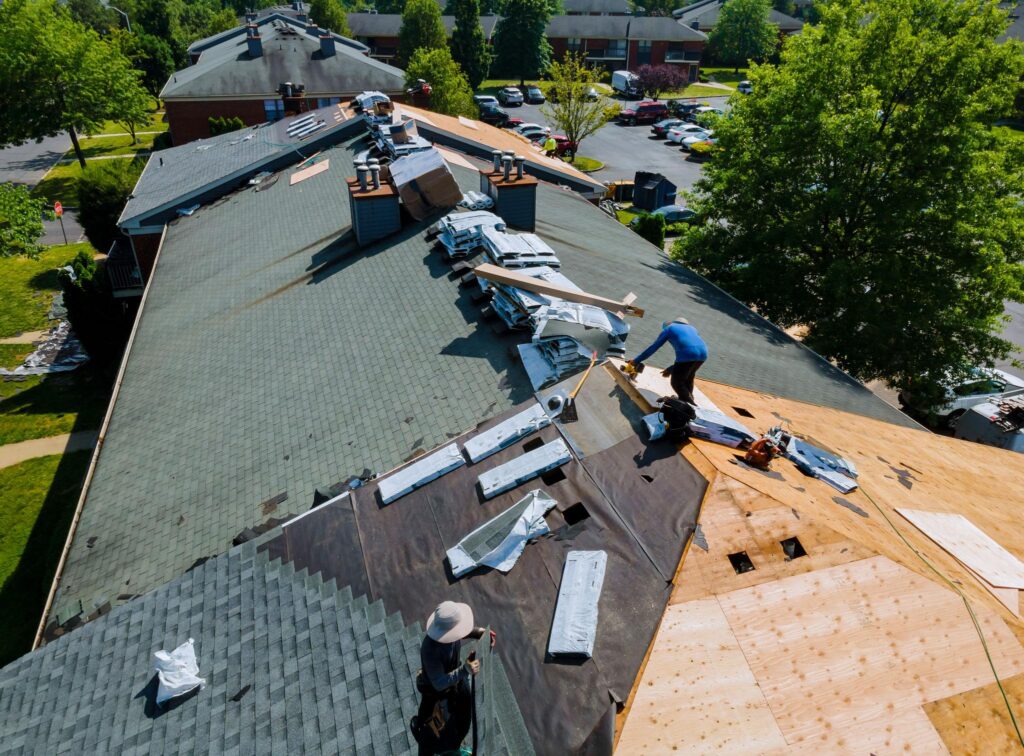
Roofing services in Bartow, FL
Bartow’s work starts with the details, because that is where a roof of this age leaks. Wall junctions, chimney flashing, vent stacks and the transition where an addition meets the original roof are the recurring calls, and they are the ordinary business of our roof repair work. Where the flashing is original and has been sealed repeatedly, the repair is to rebuild the detail rather than seal it again.
On the 1950s and 1960s houses the covering question usually arrives with the deck question. A third layer over tired sheathing is a short-lived answer, and what a full strip and re-cover involves is set out on the roof replacement page. Where the deck is sound and the pitch is shallow, a coating can be the more sensible spend, covered on the roof coating page.
Shingle selection and the repair-versus-replace judgement on a shingle roof are described on the shingle roofing page, and homeowners who are finished with shingle cycles tend to ask about metal, which is on the metal roofing page. Tile roofs appear on the newer and larger houses, where the tile usually outlasts the underlayment beneath it; that distinction is explained on the tile roofing page.
Low-slope roofs over garages, porches and the small commercial buildings around the courthouse square are membrane work, with EPDM and TPO covered separately. When a storm opens a roof, stopping the water is the first job and is described on the tarping page. When the ceiling is wet and the source is genuinely unclear, the inspection page explains how that question gets settled.
Water coming through the ceiling right now
Why homeowners in Bartow choose us
Old houses punish guesswork. On a Bartow roof the visible problem is often the third one down the line: a stain in a back bedroom that traces to a chimney flashing, which was itself hiding a soft section of sheathing, which was caused by a gutter that has been overflowing onto the fascia for years. Quoting the first thing you see is how a repair turns into three. We start in the attic and work outward, photograph what the deck actually looks like, and put the cause in writing next to the fix. Where a detail has been sealed three times, we say it needs rebuilding rather than another bead of sealant. Where a roof has one more covering left in it, we say that too, even though it is the smaller job.
Why now, before another storm season in Bartow
- Bartow's median build year is 1976. A roof replaced once in the 1990s is already at the end of its second life, and the deck beneath it has been through fifty years of summer heat.
- With 41.4% of the housing predating 1970, a large share of the city's roofs sit on original sheathing, and sheathing does not improve with another wet season on top of it.
- Rain arrives in a block, 23.07 inches across three months. A leak found in spring is a repair; the same leak in July is a repair, a ceiling and possibly a wall.
- Insurance inspections read roof age and condition. A roof that is intact but old reads differently from one with documented remaining life.
- Hail here is frequent and small, which bruises shingle mat without breaking the surface, so damage on an older roof is found late and usually by accident.
What a roof of this age is already doing
- Decking: original sheathing on a 1950s or 1960s house is the single biggest unknown in any quote, and it is only answered by opening the roof or the attic.
- Flashing: chimney and wall details from that era were often formed on site, and decades of sealant over the top hide how far the metal has gone.
- Fascia and soffit: overflow from undersized gutters rots the timber behind the gutter line, which then reads as a roof leak at the eave.
- Layers: a second or third covering adds weight and hides the deck, so the only honest way to assess the roof is to strip it.
- Penetrations: vent stacks and boot seals dry out and crack, and on an old roof each one is a separate small entry point for water.
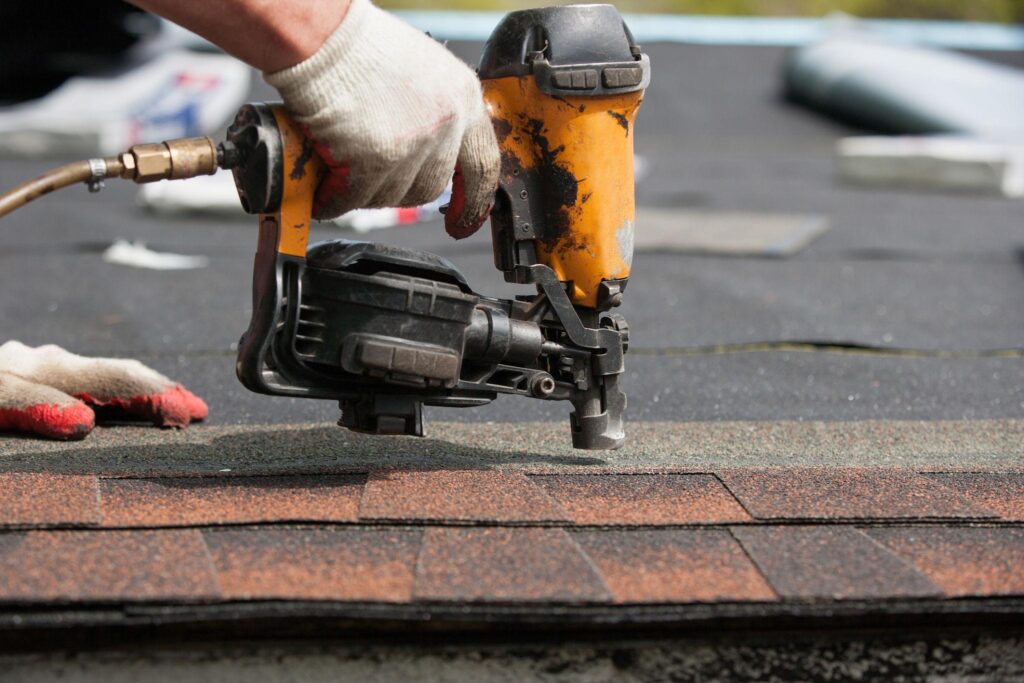
Repairs that come back
On a Bartow roof, the repair that returns is usually the one that treated a symptom at the surface. Water entering at a chimney can surface three or four feet away, along a rafter or across the top of a ceiling joist, and sealing the shingle above the stain seals nothing. The second repeat offender is the eave: a gutter that overflows sends water behind the fascia, and no amount of roof repair stops that until the gutter is sorted. The third is a patch over soft sheathing, which flexes underfoot and reopens the seam within a season. Each is diagnosable at the first visit, and each is cheaper to diagnose than to repeat twice.
Bartow anchors the south of Polk County, with Mulberry and the phosphate country to the west, Eagle Lake and Winter Haven to the north-east, Lake Alfred and Polk City north, and Lakeland up the road past Mulberry. The map below is centred on the city rather than on an office, because the address that matters on a roof call is yours.
Frequently asked questions about roofs in Bartow
Why are Bartow’s roofs harder to quote than newer ones?
Because the deck and the details are the unknown. 41.4% of the city’s 7,635 homes were built before 1970, and on a house of that age the sheathing under a second covering may be sound, patched or soft, and the original flashing may be intact or long gone under sealant. None of that is visible from the driveway, which is why a figure given without opening the roof is provisional rather than final.
Is a third layer of shingles allowed on an older Bartow roof?
Weight and deck condition are the two constraints, and both are decided by inspection rather than by rule of thumb. The larger point is that a third covering hides whatever the deck is doing, and on a house built in the 1950s or 1960s the deck is the part most likely to need attention. Where the sheathing is sound, a strip and re-cover is the durable answer; where it is not, the deck is replaced as part of the job.
Does a roof repair in Bartow need a permit, and who issues it?
Inside the city limits, permitting runs through the City of Bartow’s Development Services department. Addresses outside the city limits, which on the edges of town can sit a street away from an address inside them, fall to Polk County. Permit requirements vary by address, so confirm the authority and the inspection sequence before work is scheduled rather than after.
Bartow is the lowest of the Polk cities. Does 118 feet of elevation matter?
It matters for drainage, not for structure. At roughly 118 feet above sea level on flat ground, water leaves a roof and then moves slowly, so gutters and downspouts do more work than they would on a hillside, and the fascia behind a gutter sees more water. Low-slope porch and garage roofs are where ponding shows first. There is no snow load and no freeze-thaw cycle to design for, so the loads are rain, sun and wind.
What is the 15 year roof rule in Florida?
It is an insurance underwriting practice rather than a building code: many carriers inspect, surcharge or decline at or past 15 years of roof age. With a 1976 median build year in Bartow, most roofs here are far past that line, so the question an underwriter is really asking is condition. Documentation of remaining life, or of a replacement, is what answers it.
Can a handyman handle a small roof repair in Bartow?
The dividing line is whether the work changes the roof covering, not how small the job looks. Replacing a vent boot or reseating a lifted tab is a small repair; opening a valley, rebuilding chimney flashing or re-covering any part of the surface is permitted work with inspections attached. If the job touches the covering rather than what sits under it, it is not a handyman job.
Where we work around Bartow
Next step: call (863) 304-9132
What happens when you call?
Roof Repair Lakeland FL takes the call, and you describe what you are seeing: where the stain is, when it appears and what sits directly above it. That usually narrows the cause before anyone gets on the roof.
What should I have ready?
The age of the roof if you know it, any papers from a previous covering, and photographs of the stain taken while it is wet. Note the time and the weather when it shows up.
If water is coming in now, what first?
Move what is under the leak and put a container down. Do not go onto a wet roof. Stopping the entry is discussed on the phone and comes before diagnosis.
What will the first visit produce?
A written scope naming the cause, the repair and anything found in the attic that changes it. If a repair will not hold on a deck this age, that is said at the same visit.
What if the repair needs a permit?
Inside Bartow the permit and inspections come from the city’s Development Services department. You are told which inspections the permit carries before work begins.
What if the roof needs more than a repair?
Then the conversation moves to a strip and re-cover, and the decision waits until the deck has been opened. A replacement scoped from the driveway is a guess with a number attached.