
Call Us
(863) 304-9132
Roof leaks and storm damage
Tell us what you are seeing
Auburndale and Polk County
Roof work across the corridor
Most roof calls in Auburndale start with a stain on a ceiling, not a missing shingle. The town’s housing splits in two: 12.5% of Auburndale’s 6,951 homes went up in the 1950s, and 33.8% in 2000 or later. The older houses leak where wall and chimney junctions were sealed over instead of rebuilt. The newer ones lose granules first and mat strength second, so a roof from the mid-2000s can look whole from the driveway and still fail a wind test. Roofing in Auburndale usually comes down to which of those two problems you actually have.
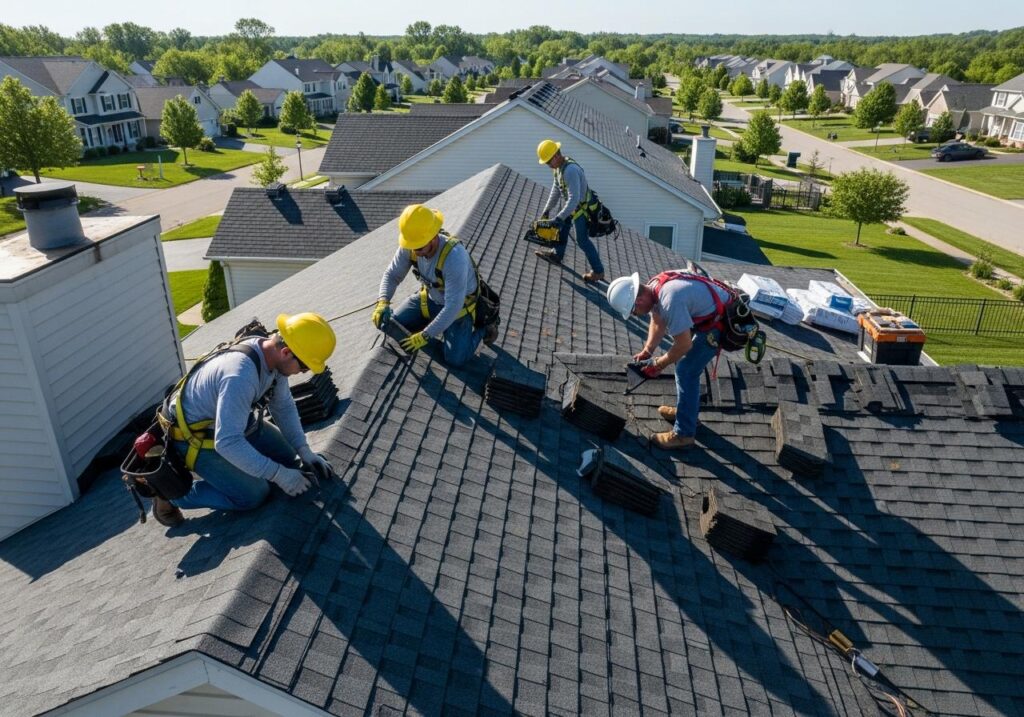
Homes in Auburndale, FL
Setting and elevation in Auburndale
Auburndale sits at roughly 158 feet above sea level, measured by the USGS 3D Elevation Program at the town’s place point. That number sounds like trivia until you watch water behave on a roof. Auburndale’s ground is flat, with Lake Ariana and the smaller lakes holding the low spots, and flat ground means slow drainage rather than fast runoff. Roofs here are built with that in mind: shallow pitches over porches, carports and rear additions, and gutters that have to move a lot of water sideways before it leaves the lot. There is no snow load to design for and no freeze-thaw cycle worth the name. The load on an Auburndale roof is water, sun and wind, in that order, and the weak points are the transitions rather than the field of shingles.
When Auburndale’s roofs went on
The median home in Auburndale was built in 1988, and the era spread explains most of what a roofer finds up there. One fifth of the housing, 21.4%, dates from 2000 to 2009, which means architectural shingle roofs now at the twenty-to-twenty-five year mark. Another 15.0% went up in the 1980s and 14.1% in the 1970s, on plywood decks with three-tab shingles that have usually been re-covered at least once. The 1950s contribute 12.5%, and those houses carry the shallow roof pitches and small overhangs of their period, with junctions that were never generous. In total, 23.8% of Auburndale’s homes predate 1970. Age alone does not condemn a roof, but it predicts where it will fail.
The weather these roofs take
The nearest long-record climate station to Auburndale, the National Weather Service site at Winter Haven’s municipal airport (station USW00012876), averages 50.94 inches of rain a year, and 23.07 inches of that falls in June, July and August. The same station’s July normal maximum is 91.7°F, and it records about 106 days a year at or above 90°F. Heat like that cooks the volatiles out of asphalt shingles and then a summer storm hits a brittle surface. The county’s own storm record is blunt: between 2016 and 2024, NOAA logged 24 hail events, 31 thunderstorm wind events and 10 tornadoes in Polk County. A roof in Auburndale is asked to survive repeated small impacts, not one catastrophic event, and small impacts are what open the seams first.
Who issues the roofing permit in Auburndale
Auburndale is in Polk County, and inside the city limits the permitting and inspection work sits with the City of Auburndale’s Community Development department, which handles permitting along with commercial and residential inspections. If your address is inside the city, that is the office that sees the roof permit. If it is outside the city limits but still carries an Auburndale mailing address, the authority is different, and the difference matters before the first bundle of shingles goes up rather than after. Ask which inspections the permit carries, and get the answer in writing on the permit itself. Permit requirements vary by address, so it is worth a phone call to the city or to Polk County before work is scheduled.
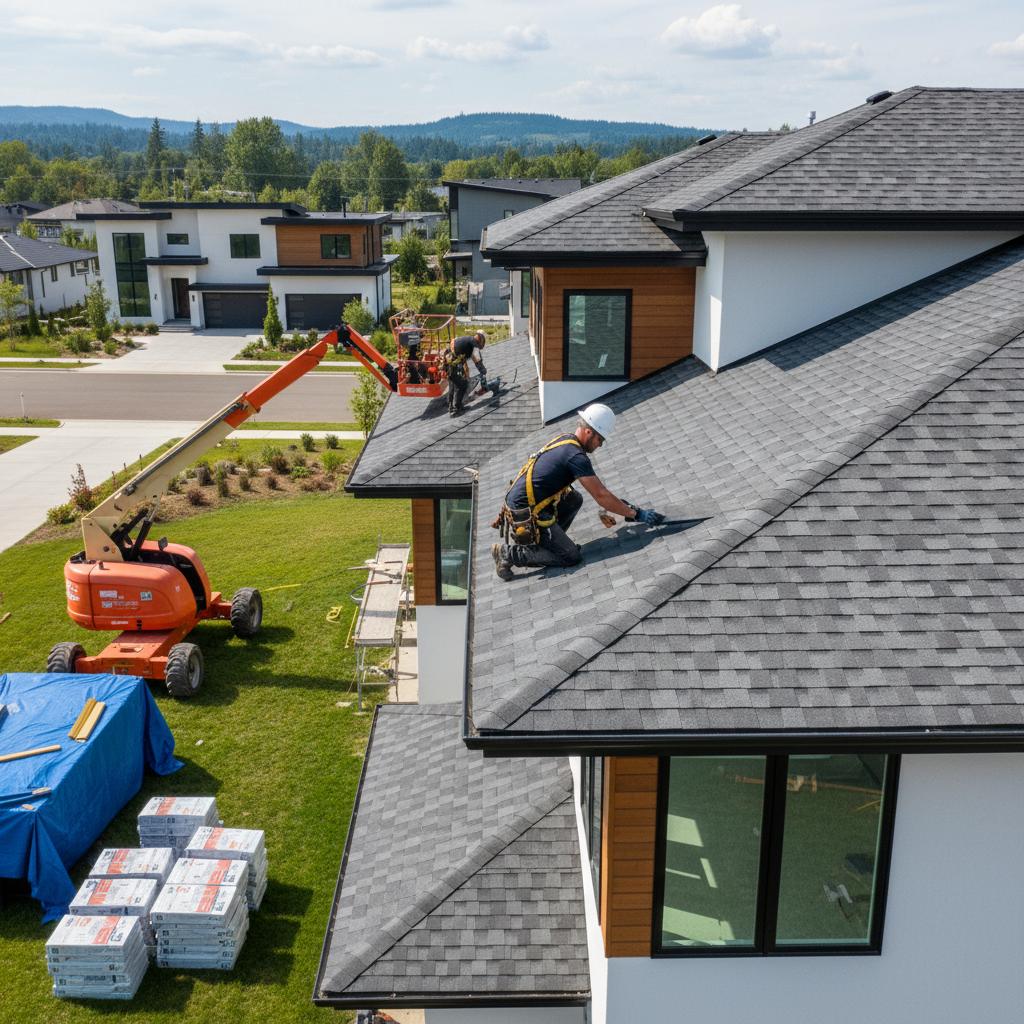
Roofing services in Auburndale, FL
Auburndale’s roofs need three different kinds of work, and the house decides which one applies. The 1950s and 1960s houses need junction work more than field work: the leak is at a wall, a chimney, a vent stack or the seam where an addition meets the original roof, and the repair is flashing and counter-flashing rather than a new surface. Those calls are the everyday business of our roof repair work.
The 1970s and 1980s houses are usually on a second covering, and the question is whether the deck under it is sound enough for a third. Where the answer is no, the decision moves to full replacement, which is set out on the roof replacement page. Where the deck is sound and the slope is shallow, a coating system can buy years rather than a decade, and that trade-off is covered under roof coating.
The 2000s housing is mostly architectural shingle, and the specific failures are granule loss, nail pops, and wind-lifted tabs at hips and ridges. Shingle work is described on the shingle roofing page, and the metal alternative for homeowners who are done with shingle life cycles is on the metal roofing page.
Auburndale also has its share of tile roofs, mostly on newer and larger houses, where the tile outlives the underlayment beneath it. That is a different repair from a cracked tile, and it is explained on the tile roofing page. Flat and low-slope roofs over garages, porches and small commercial buildings are handled as membrane work, with EPDM and TPO described on their own pages. When a storm has opened a roof and the ceiling is wet, the first job is to stop water entering, which is what the tarping and emergency response page covers. And when nobody knows yet whether the roof is the problem at all, the roof inspection page explains how that question gets answered.
Water coming through the ceiling right now
Why homeowners in Auburndale choose us
Because Auburndale is small enough that a roof done badly gets seen from the street for twenty years, the work here starts with diagnosis rather than a sales call. We get into the attic before we quote anything, because the difference between a failed vent boot and a failed valley changes the job completely, and the two look identical from the driveway. On the older houses we open the junction instead of sealing over it, because a bead of sealant on top of tired flashing buys one season. On the 2000s roofs we check deck fasteners and sheathing condition before we talk about covering, since a shingle overlay on soft decking is a short-lived repair. If the honest answer is that a repair will not hold, you will hear that at the first visit rather than after the third.
Why now, before another storm season in Auburndale
- The timing argument in Auburndale is arithmetic, not sales pressure. A roof from 2004 is 22 years old; the same roof from 2009 is 17. Either way it is inside the window where granules are gone, the mat is brittle and the next wind event lifts tabs instead of flexing them.
- A 1990s roof on a second covering has usually reached the end of that covering, and the deck beneath it is the unknown. Waiting does not make the deck better.
- Insurance inspections read roof age. A roof past its service life is a harder conversation than one that is intact, and the timing of a replacement changes what an inspector sees.
- Rain arrives in a block: 23.07 inches across June, July and August. A leak found in May is a repair. The same leak found in July is a repair plus a ceiling.
- Hail in Polk County is frequent and small rather than rare and large, and small hail is what bruises shingle mat without breaking the surface, which is why damage is often found late.
What a roof of this age is already doing
- Decking: on 1970s and 1980s houses the sheathing is often the original plywood, and it is the part that decides whether a covering can be replaced without a deck replacement.
- Underlayment: felt from the 1990s has usually dried out and cracked at the laps, which is why a tile roof can leak with every tile intact.
- Flashing: original flashing at walls and chimneys has typically been sealed rather than replaced, and sealant has a service life measured in seasons.
- Fasteners: nail pops and backing-out are common on roofs that have been through several heat cycles, and they show up as lifted tabs rather than obvious holes.
- Drainage: gutters sized for a 1950s roof may not carry the volume a summer storm delivers now, and overflow at the fascia is often read as a roof leak.

Repairs that come back
A repair that returns is usually a repair made in the wrong place. The common version in Auburndale is a leak reported at a ceiling stain that is three or four feet from the actual entry, because water travels along a rafter or across the top of a ceiling joist before it drops. Sealing the shingle above the stain does nothing. The second common version is a junction repaired on the outside only, with the wall flashing left in place underneath, which holds until the next driving rain comes from the other direction. The third is a low-slope section treated as if it were pitched, with shingles laid below the slope the shingle is rated for. Each of these is diagnosable at the first visit, and each is cheaper to diagnose than to repeat.
Auburndale sits between Lakeland and Winter Haven, and the work follows that corridor: Auburndale itself, Polk City to the north, Winter Haven and Eagle Lake to the east, Mulberry to the south and Lakeland to the west, with Lake Alfred and Bartow inside the same radius. The map below is centred on the town rather than on an office, because the address that matters on a roof call is yours.
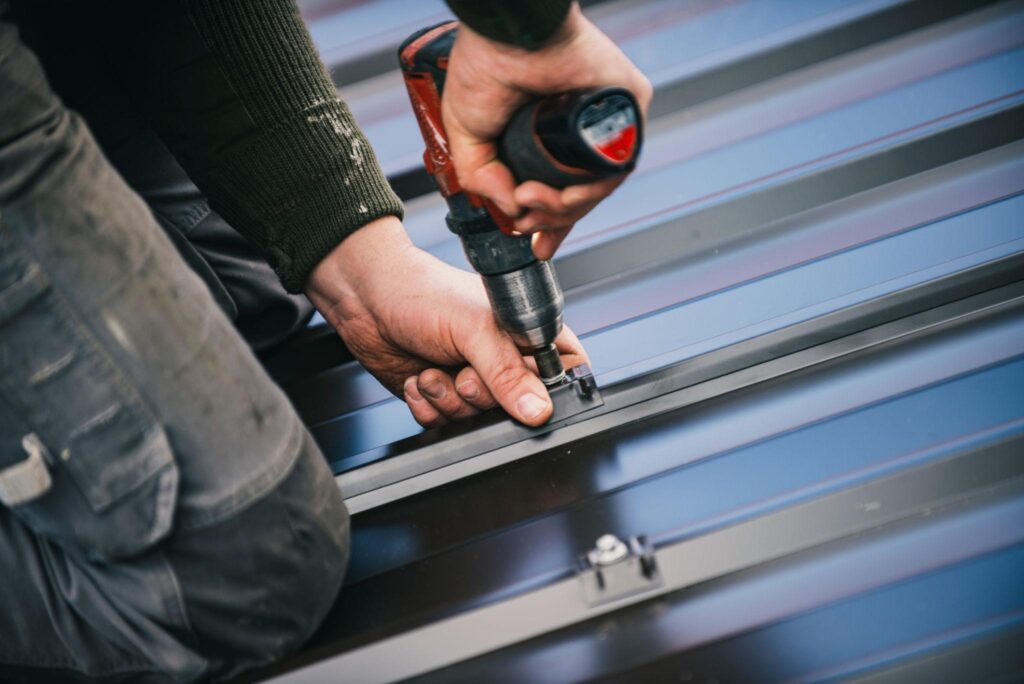
Frequently asked questions about roofs in Auburndale
How old is the average roof in Auburndale, and when is replacement due?
The median home in Auburndale was built in 1988, so the median original roof, where it survives, is in its late thirties. In practice the stock is mixed: 21.4% of homes went up between 2000 and 2009 and are on a first shingle layer at 17 to 26 years old, while 23.8% predate 1970 and have usually been re-covered at least once. Replacement is due when the deck or the underlayment has failed, not simply when the calendar says so, which is why the answer is found in the attic as much as on the surface.
Does a roof repair or replacement in Auburndale need a permit?
Inside the city limits, permitting and inspection for this kind of work sits with the City of Auburndale’s Community Development department, which handles permitting together with commercial and residential inspections. Addresses outside the city limits fall to a different authority even when the mailing address still says Auburndale. Permit requirements vary by address, so confirm with the city, or with Polk County if you are outside the limits, before work is scheduled rather than after.
Auburndale is only about 158 feet above sea level. Does that affect a roof?
It affects drainage more than structure. At that elevation, on ground as flat as Auburndale’s, water leaves a roof slowly and has nowhere to fall away quickly, so gutters, downspouts and the fascia behind them do more work than they would on a slope. Low-slope porch and carport roofs are where ponding shows up first, and standing water finds the seams. There is no snow load and no meaningful freeze-thaw cycle to design for, so the loads that matter here are rain, sun and wind.
What does the storm record here actually look like?
For Polk County, NOAA’s storm database records 24 hail events, 31 thunderstorm wind events and 10 tornadoes between 2016 and 2024. The pattern matters more than the totals: this is frequent small hail and repeated straight-line wind rather than one large event, and small hail bruises shingle mat without visibly breaking the surface. That is why damage on an Auburndale roof is often found during an inspection months after the storm that caused it, and why granule loss at valleys and south-facing slopes is worth reading closely.
What is the 15 year roof rule in Florida?
It is an insurance underwriting practice rather than a building code: many carriers treat a roof at or past 15 years as a reason to inspect, surcharge or decline. With a 1988 median build year in Auburndale, a large share of roofs here are well past that line, so the practical question is condition rather than age. Documentation of remaining life, or of a replacement, is what an underwriter asks for.
Can a handyman handle a small roof repair in Auburndale?
For work that changes the roof covering, the permit and the inspection are the line, not the size of the job. Replacing a vent boot or a single lifted shingle is a small job; opening a valley, replacing flashing at a wall, or re-covering any part of the surface is permitted work with inspections attached. The useful test is whether the repair touches the roof covering or only what sits under it.
Where we work around Auburndale
Next step: call (863) 304-9132
What happens when you call?
Roof Repair Lakeland FL takes the call, and you describe what you are seeing: where the stain is, when it appears and what is directly above it. That conversation usually narrows the likely cause before anyone gets on a roof.
What should I have ready?
The age of the roof if you know it, any paperwork from a previous covering, and photographs of the stain taken when it is wet. If water is entering, note the time and the weather at the time.
If water is coming in now, what first?
Get what is under the leak out of the way and put a container down. Do not go onto a wet roof. The tarping conversation happens on the phone, and stopping the entry comes before diagnosis.
What will the first visit produce?
A written scope that names the cause, the repair and anything found in the attic that changes it. If a repair will not hold, that is stated at the same visit rather than discovered later.
What if the repair needs a permit?
Inside Auburndale the permit and the inspections come from the city’s Community Development department. You are told which inspections the permit carries before work starts, so nothing is discovered at the wrong end of the job.
What if the roof needs more than a repair?
Then the conversation moves to covering or replacement, and the decision waits until the deck has been inspected. A replacement scoped from the driveway is a guess dressed as a quote.