
Call Us
(863) 304-9132
Roof leaks and storm damage
Tell us what you are seeing
Lakeland and Polk County
Roof work across the city
Lakeland is the hardest city in the county to generalise about, because every roof era is here at once. The median home was built in 1981, 29.1% of the 53,926 homes predate 1970, and 24.2% were built after 2000. That means a 1950s bungalow, a 1978 subdivision house and a 2015 build can share a block, and each one fails for a different reason. The 1950s house leaks at wall details that were formed on site. The 1978 house is on its second or third covering over forty-eight-year-old decking. The 2015 house is still on a first covering and should not need anything except storm repair.
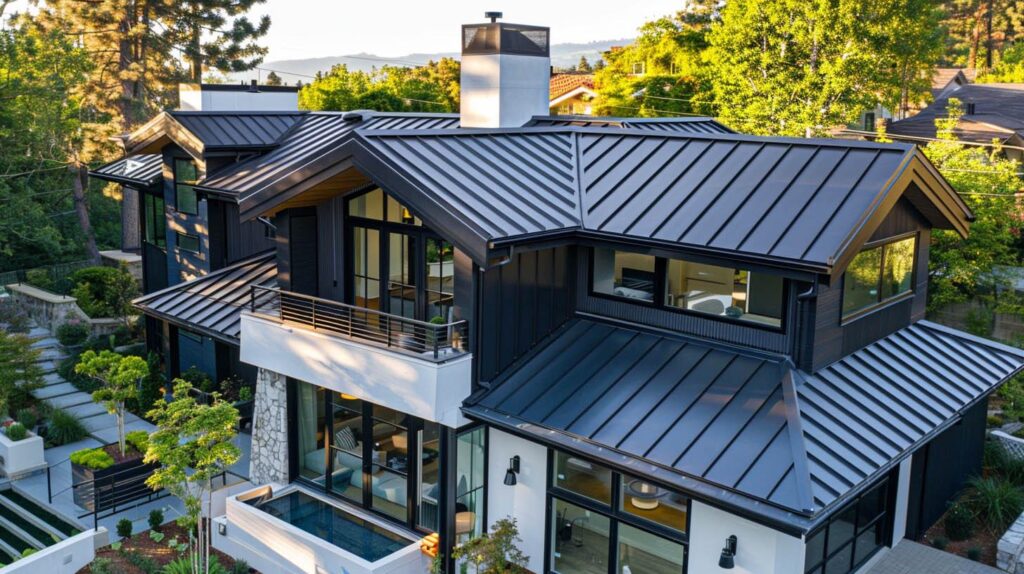
Homes in Lakeland, FL
Setting and elevation in Lakeland
Lakeland sits at about 202 feet above sea level, the highest of the Polk cities we work in, on 66.6 square miles of land with 8.8 square miles of water inside the city limits. The elevation is enough to make the city the local high ground without making it steep: the terrain rolls gently, and water still moves slowly once it leaves a roof. What the elevation and the size together produce is variety. A roof on the higher ground north of the centre drains differently from one on a lot that falls toward a lake, and gutters, downspout outlets and the grade at the foundation all behave differently across a city this wide. The structural load is rain, sun and wind.
When Lakeland’s roofs went on
Lakeland’s median build year is 1981, and with 53,926 housing units the era spread covers almost every period. The 1970s account for 18.5% and the 1980s for 17.1%, which together make the largest single block of stock; 29.1% of homes predate 1970, including 6.2% from 1939 or earlier. The 2000s add 14.2% and the 2010s 8.5%, so 24.2% is post-2000. In roofing terms that is a city of second and third coverings over original decking, alongside a newer minority still on a first layer. On the older stock the deck and the wall details decide the job; on the newer stock the covering does. Because the two are often on the same street, a Lakeland quote has to be house-specific rather than neighbourhood-specific.
The weather these roofs take
The long-record station for this part of Polk County, at Winter Haven’s municipal airport, averages 50.94 inches of rain a year, with 23.07 inches of it in June, July and August. Its July normal maximum is 91.7°F, and it records about 106 days a year at or above 90°F. That is a roof surface cooked for a third of the year and then hit by concentrated rain. NOAA logged 24 hail events, 31 thunderstorm wind events and 10 tornadoes across Polk County between 2016 and 2024. Wind is the agent that finds the weakest edge, and in a city this size that edge is somewhere different on every street. Heat sets the timetable and wind picks the date.
Who issues the roofing permit in Lakeland
Lakeland is in Polk County, and inside the city limits the building permit and inspection function belongs to the City of Lakeland rather than to the county. The city’s website did not respond from our location when we checked it, so we are not going to name a division we could not confirm. The answer for your address is one call to the city, and it is worth making early, because a permitted job has an inspection sequence that decides when a roof can be left open. Permit requirements vary by address, so confirm the authority, whether the specific repair needs a permit, and which inspections come with it. On a house from the 1950s or 1970s that sequence is worth knowing before the first shingle comes off.
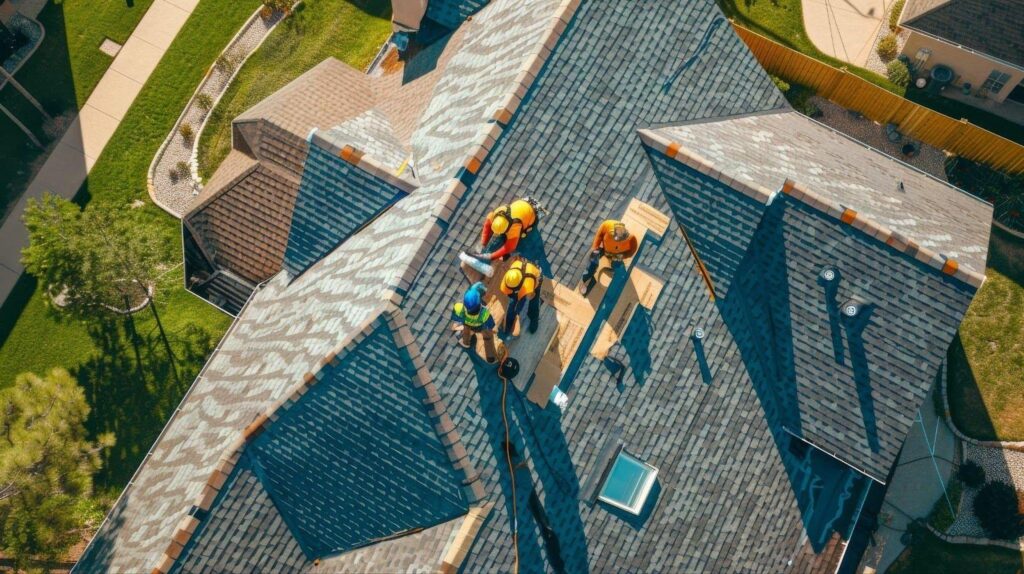
Roofing services in Lakeland, FL
With every era represented, the work in Lakeland runs from detail repair to full re-covering, and the house decides which. The 1950s and 1960s houses are detail-first: wall junctions, chimney flashing, vent stacks and the seams where additions meet. That is the everyday business of our roof repair work.
The 1970s and 1980s houses are usually on a second covering over original decking, which makes the deck the real question. What a strip and re-cover involves is set out on the roof replacement page, and the shingle-specific judgement between patching and re-covering is on the shingle roofing page. Where the pitch is shallow and the surface is sound, a coating system can add years rather than a decade, with the trade-offs on the roof coating page.
Lakeland has more tile than the smaller towns, mostly on larger and newer houses, and the important distinction there is that the tile outlives the underlayment beneath it; the tile roofing page explains that. Homeowners planning past shingle cycles ask about metal, covered on the metal roofing page.
Flat and low-slope roofs over garages, porches and commercial buildings across the city are membrane work, with EPDM and TPO each covered on their own pages, and commercial buildings have their own considerations on the commercial roofing page. After a storm opens a roof, stopping the water comes first and is covered on the tarping page. When a wet ceiling has more than one possible cause, the inspection page covers how that is narrowed down.
Water coming through the ceiling right now
Why homeowners in Lakeland choose us
A city this size rewards a roofer who reads the house before the roof. On a 1950s Lakeland house the leak is usually at a detail, and the fix is metal and counter-flashing rather than sealant. On a 1978 house the covering may be fine and the deck is the problem, or the reverse, and only the attic settles it. On a 2015 house the answer is usually a repair and nothing more. We open the attic, photograph the deck, and write the cause beside the fix. When a repair is the right spend, that is what gets recommended, even though a full covering is the larger job. When a roof has years left, we say so.
Why now, before another storm season in Lakeland
- 29.1% of Lakeland's homes predate 1970 and 18.5% date from the 1970s. On those roofs the covering has been replaced at least once and the original decking is now the weak point.
- The 1980s built another 17.1%. A roof replaced in the 1990s on one of those houses is at the end of its second life today.
- Rain arrives in a block: 23.07 inches across three months. A leak found in April is a repair; the same leak in July is a repair plus a ceiling.
- Insurance underwriting reads roof age. A roof at or past fifteen years invites an inspection that will happen with or without a decision from you.
- Hail across Polk County is frequent and small, which bruises shingle mat without breaking the surface, so damage is found months after the storm that caused it.
What a roof of this age is already doing
- Deck condition: on 1970s and 1980s houses the original sheathing decides whether a re-cover is possible, and it is only answered by opening the roof.
- Detail metal: wall, chimney and vent flashing from the 1950s and 1960s has usually been sealed repeatedly, and the metal underneath has gone further than the sealant shows.
- Underlayment: felt from the 1990s is at the end of its life under tile and shingle alike, which is why a tile roof can leak with every tile intact.
- Sealant strips: on post-2000 roofs the adhesive line between tabs is the first thing to fail, and it fails on the windward slope before anywhere else.
- Gutters and fascia: overflow at the gutter line rots the timber behind it, and that reads as a roof leak at the eave.
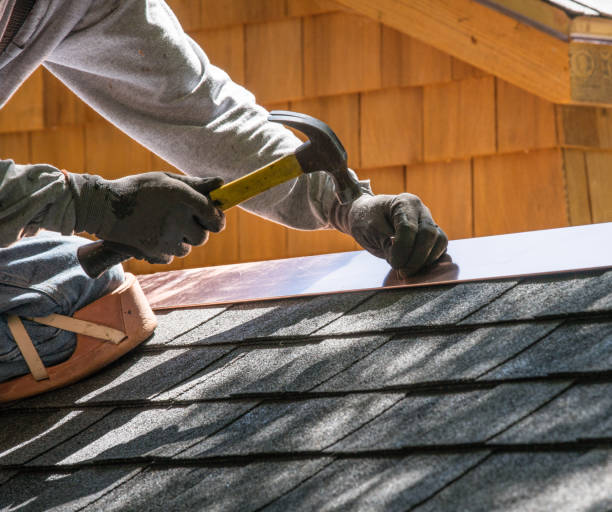
Repairs that come back
In a city the size of Lakeland, the same three repeat repairs turn up. The first is a stain sealed at the wrong end, because water entering at a valley or a penetration travels along a rafter before it drops through a ceiling, several feet from the hole. The second is a wall or chimney detail patched over the top while the original metal stayed in place, which holds until rain arrives from the direction the patch was not shaped for. The third is a patch over sheathing that has gone soft, so the repair moves underfoot and reopens within a season. Each is diagnosable at the first visit, and each is cheaper to diagnose than to repeat.
Lakeland is the northern anchor of the county, with Polk City and Lake Alfred to the south-east, Auburndale directly south, Winter Haven beyond it, Bartow to the south-west and Mulberry further down. The map below is centred on the city rather than on an office, because the address that matters on a roof call is yours.
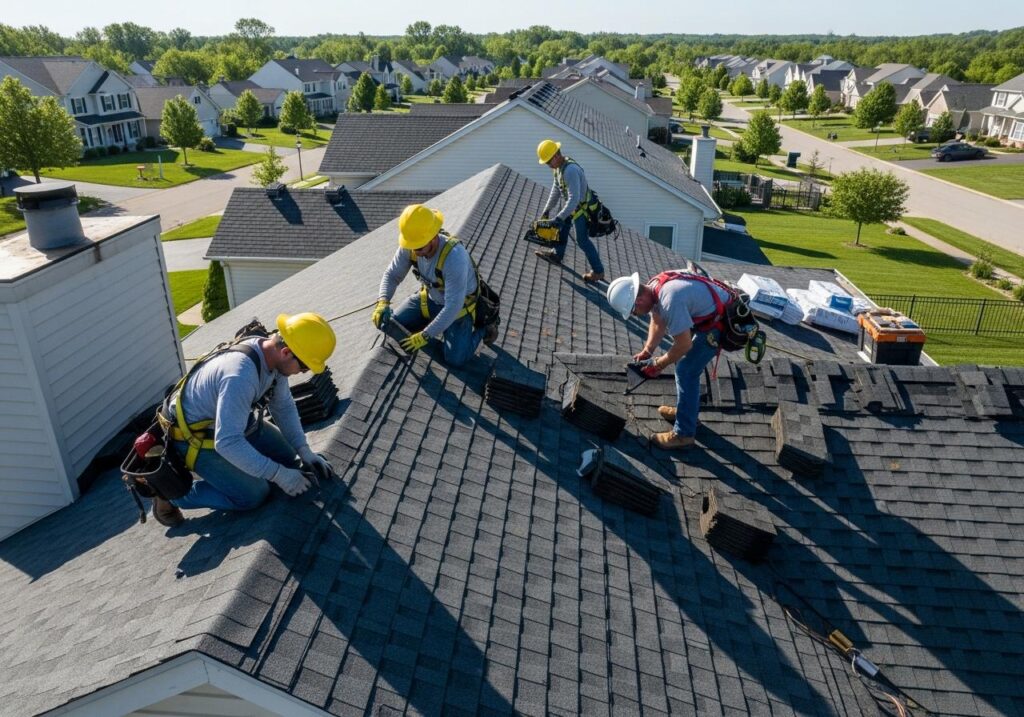
Frequently asked questions about roofs in Lakeland
How many different roof eras does Lakeland actually have?
Nearly all of them. The median home was built in 1981 across 53,926 housing units, with 29.1% predating 1970, 18.5% from the 1970s, 17.1% from the 1980s and 24.2% built after 2000. That spread is why a roofer cannot answer “does this need replacing” for Lakeland as a whole. The decade the house was built in narrows it, and the attic settles it.
Does a higher elevation make any difference to a Lakeland roof?
At about 202 feet above sea level the city is the local high ground, but the effect is on drainage rather than structure. Water still moves slowly on gently rolling ground, and a lot that falls toward a lake drains differently from one on higher ground. There is no snow load and no freeze-thaw cycle to design for, so the loads are rain, sun and wind wherever in the city the house sits.
Does a roof repair in Lakeland need a permit, and from whom?
Inside the city limits the City of Lakeland is the permitting authority, not Polk County. We were not able to confirm the city’s current permitting page when we checked, so the reliable answer for your address is to ask the city directly. Permit requirements vary by address, so confirm whether the specific repair needs a permit and which inspections come with it before work is scheduled.
How much storm damage does Lakeland see in a typical year?
Across Polk County, NOAA recorded 24 hail events, 31 thunderstorm wind events and 10 tornadoes between 2016 and 2024. The pattern is frequent small events rather than one large one, and small hail bruises the mat under the granules without breaking the surface. That is why damage is often found during an inspection months later, and why granule loss at valleys and on south-facing slopes is worth reading closely.
What is the 15 year roof rule in Florida?
It is an insurance underwriting practice rather than a building code: many carriers inspect, surcharge or decline at or past 15 years of roof age. With a 1981 median build year, a large share of Lakeland’s roofs are well past that line. What an underwriter wants is evidence of condition or of replacement, which is a documented answer rather than an argument.
Can a handyman handle a small roof repair in Lakeland?
The test is whether the work changes the roof covering, not how small the job looks. A vent boot or a lifted tab is a small repair; opening a valley, rebuilding chimney flashing or re-covering part of the surface is permitted work with inspections attached. If the repair touches the covering rather than only what sits beneath it, it belongs with a roofing job.
Where we work around Lakeland
Next step: call (863) 304-9132
What happens when you call?
Roof Repair Lakeland FL takes the call, and you describe what you are seeing: where the stain is, when it appears and what sits directly above it. That usually narrows the cause before anyone gets on a roof.
What should I have ready?
The age of the roof if you know it, any paperwork from a previous covering, and photographs of the stain taken while it is wet. Note the time and the weather when it appears.
If water is coming in now, what first?
Move what is under the leak and put a container down. Do not go onto a wet roof. Stopping the entry is discussed on the phone and comes before diagnosis.
What will the first visit produce?
A written scope naming the cause, the repair and anything found in the attic that changes it. If a repair will not hold, that is said at the same visit rather than discovered later.
What if the repair needs a permit?
Inside Lakeland the permit and inspections come from the city. You are told which inspections the permit carries, and which authority covers the address, before work begins.
What if the roof needs more than a repair?
Then the conversation moves to re-covering, and the decision waits until the deck has been inspected. A replacement scoped from the driveway is a guess with a number attached.