
Call Us
(863) 304-9132
Roof leaks and storm damage
Tell us what you are seeing
Polk City and Polk County
Roof work across the town
Polk City has the newest roofs in the county and still gets the calls. The median home here was built in 1998, 45.9% of the town’s 1,169 homes went up after 2000, and only 5.6% predate 1970. That sounds like the easy end of the roofing business and is not. A builder-grade shingle installed in 2006 is twenty years old now, past its sealant strip, and often on a roof where vents, valleys and step flashings were done quickly because the whole street was being finished at once. Roofing in Polk City is mostly young-roof work: storm damage on a covering that should have had years left.
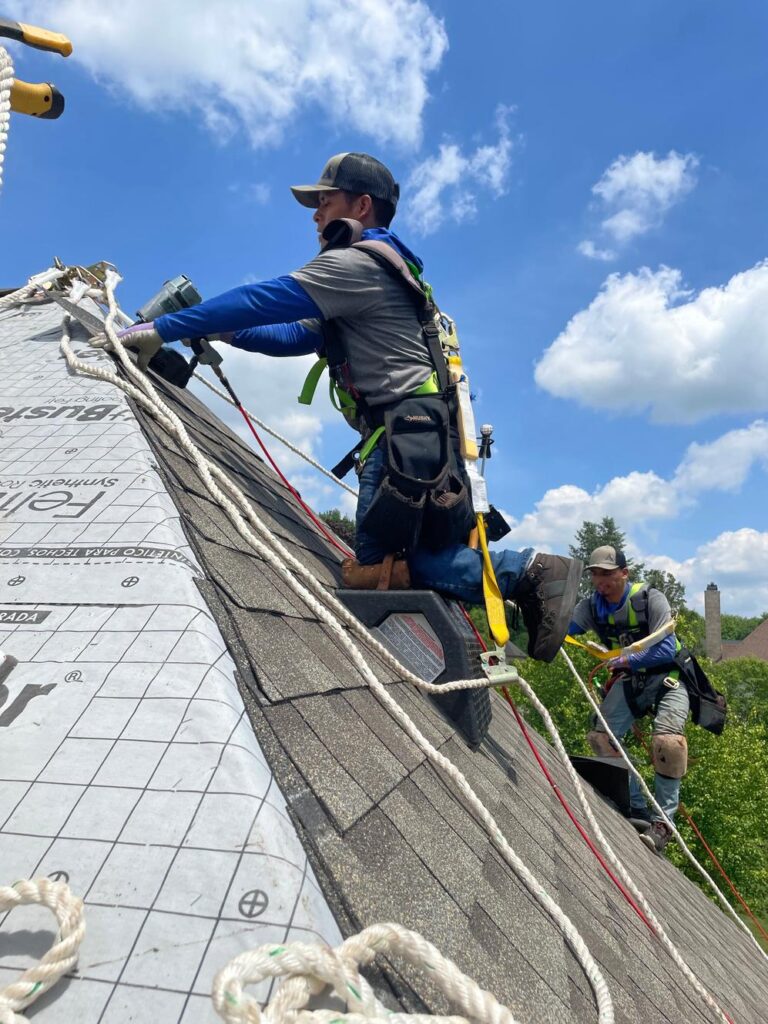
Homes in Polk City, FL
Setting and elevation in Polk City
Polk City sits at about 148 feet above sea level, on 4.5 square miles of land with 0.6 square miles of water inside the town limits. It is the smallest of the Polk cities we work in, and the ground is flat with a low water table in the wet months. On a roof that translates into slow drainage rather than fast runoff: water leaves the surface, then moves across a lot with almost no fall, and the gutter line takes the strain. The town’s roofs are also exposed, because a small city has fewer mature tree canopies to break wind and less shade to slow drying. The load is rain, sun and wind, with little to interrupt any of them.
When Polk City’s roofs went on
Polk City’s median build year is 1998, the most recent of the Polk cities we work in. The 2010s account for 27.7% of the stock, 2020 or later for 7.4%, and 2000 to 2009 for another 10.9%, so 45.9% of homes were built after 2000. The 1990s contribute 19.1% and the 1980s 18.8%. Only 5.6% of the housing predates 1970. In roofing terms this is a town of first coverings: architectural shingle in the main, with the oldest group now at twenty-five to thirty-five years. That makes the work about storm damage, detail failure and the end of a first shingle life rather than about ancient decks. It also means the whole street tends to fail together, because the houses were finished in the same season.
The weather these roofs take
The long-record station for this part of Polk County, at Winter Haven’s municipal airport, averages 50.94 inches of rain a year, with 23.07 inches in June, July and August. The July normal maximum is 91.7°F, and it logs roughly 106 days a year at or above 90°F. On a young roof the heat does its damage faster than people expect, because builder-grade shingles start with less margin. NOAA recorded 24 hail events, 31 thunderstorm wind events and 10 tornadoes in Polk County between 2016 and 2024. With fewer trees to break the wind, a Polk City roof meets the gust at full strength, and the first thing to go is the sealant strip. Hail matters less by size here than by repetition.
Who issues the roofing permit in Polk City
Polk City is in Polk County, and the town is the permitting authority for addresses inside its limits, with Polk County handling properties outside them. We were not able to confirm the town’s current permitting page from here, so we are not going to name a department we could not verify. That is a phone call worth making, because a small town’s process is usually quick to confirm and easy to get wrong from the outside. The answer decides who inspects the work and when the roof can be left open, which is the risky part of any strip. Permit requirements vary by address, so confirm the authority, whether the specific repair needs a permit, and which inspections come with it before work is scheduled.
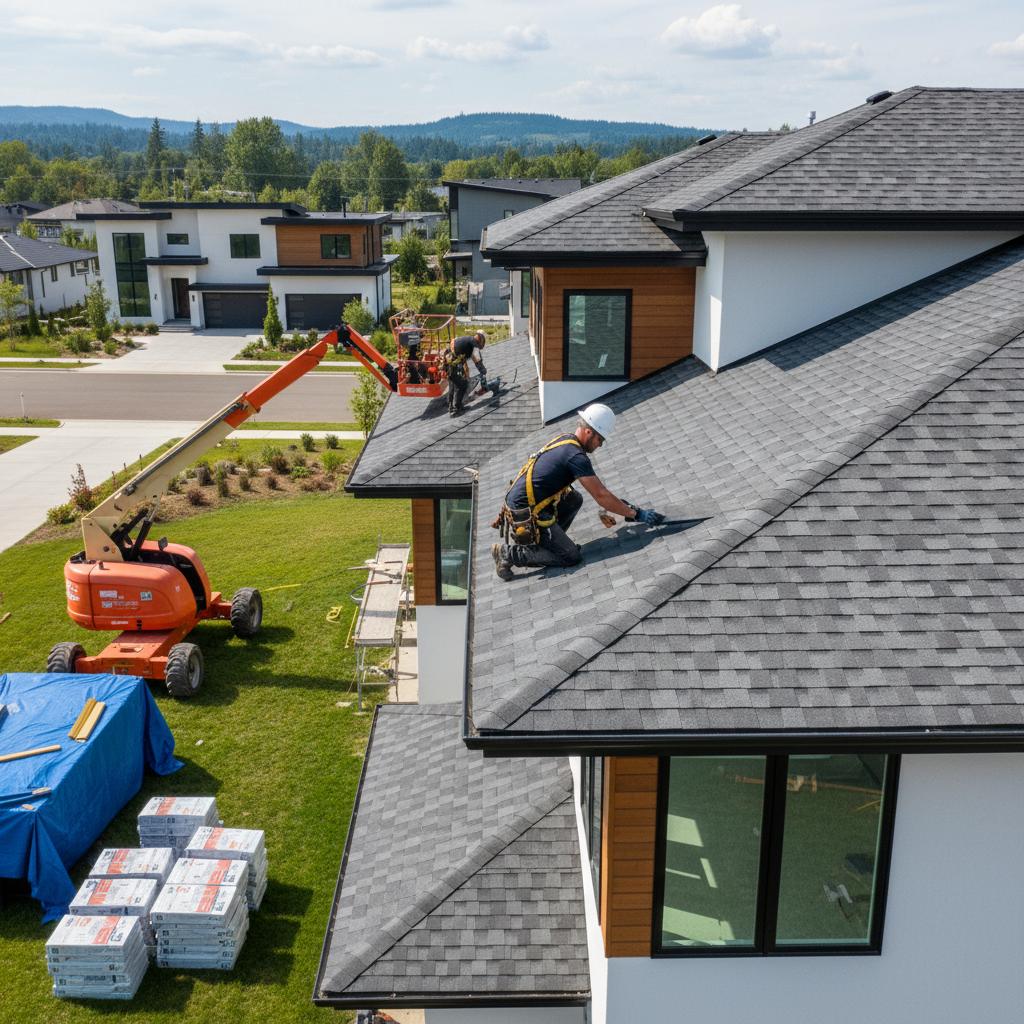
Roofing services in Polk City, FL
Polk City’s work leans on two things: storm damage on roofs that are still young, and the end of a first shingle life. The storm side is repair work, and it is described under roof repair; where the damage is wind-lifted tabs, bruised mat or a failed vent boot, the shingle-specific judgement is on the shingle roofing page.
When the first covering is genuinely finished, the decision is a re-cover, and what that involves is set out on the roof replacement page. On the 1980s and 1990s houses that decision arrives earlier, because those roofs are on a second life already.
Homeowners who are finished with shingle cycles ask what a metal roof would mean over the long run, which is covered on the metal roofing page. Tile appears on some of the larger newer houses, and the useful thing to know is that the tile outlives the underlayment beneath it, as the tile roofing page explains. Where a shallow or low-slope section needs to last without a strip, coating systems are on the roof coating page.
Low-slope roofs over garages, porches and small outbuildings are membrane work, with EPDM and TPO on their own pages. After a storm that opens a roof, stopping the water is the first job and is covered on the tarping page. When a ceiling is wet and the roof is only one suspect, the inspection page covers how that gets narrowed down.
Water coming through the ceiling right now
Why homeowners in Polk City choose us
A young roof fails for different reasons than an old one, and treating it like an old one wastes money. On a 2000s Polk City roof we start with the details that were installed in a hurry: step flashing at a wall, the valley, the vent boots, the sealant strip on the windward slope. Those are repairable. What we do not do is recommend a full covering because a roof is twenty years old, if the deck and the underlayment are still sound and the damage is local. The cause gets written next to the fix, the photographs get shown rather than described, and the option we would take on our own house is named. Where a roof has years left, we say so.
Why now, before another storm season in Polk City
- 45.9% of Polk City was built after 2000. A 2006 covering is twenty years old, and a builder-grade shingle at twenty years has usually lost its sealant strip.
- The 1980s and 1990s houses, 37.9% of the stock between them, are on a second covering or approaching the end of a first one that was installed before the newer streets were finished.
- Rain comes in a block: 23.07 inches across three months. A leak found in spring is a repair; the same leak in July is a repair plus a ceiling.
- With few mature canopies to break the wind, a gust arrives at full strength, and lifted tabs on an exposed roof let water in long before the shingle looks worn.
- Insurance underwriting reads roof age, and a roof at fifteen years and past it invites an inspection whatever the covering looks like.
What a roof of this age is already doing
- Sealant strips: the adhesive line between tabs is the first thing to fail on a builder-grade shingle, and it fails on the windward slope before anywhere else.
- Detail flashing: step flashing at walls, valley metal and vent boots installed quickly on a subdivision schedule are where young roofs leak first.
- Granule loss: grit in the gutters after rain shows the surface is going, and it goes unevenly because the sun hits some slopes far harder than others.
- Fasteners: heat cycling backs nails out over twenty years, and a backed-out nail shows as a lifted tab or a small dimple rather than a hole.
- Gutters: on flat ground the gutter line carries more water than it was sized for, and overflow at the fascia is often read as a roof failure.
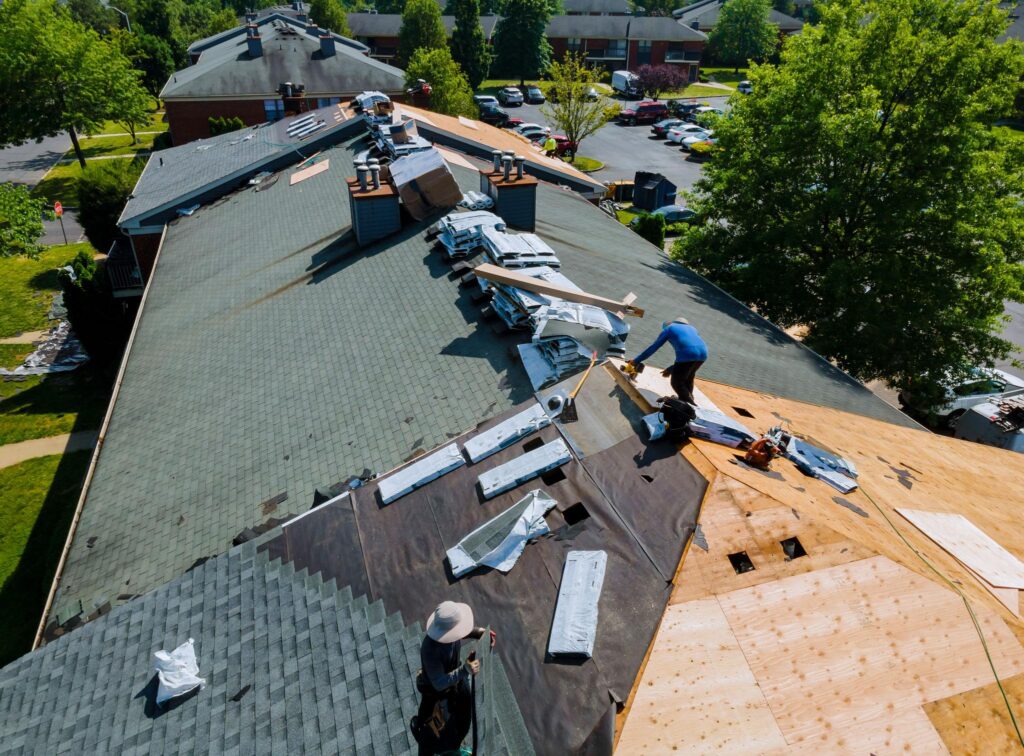
Repairs that come back
Three repairs repeat in Polk City, and all three are detail problems. The first is a step flashing at a wall that was never let into the masonry or siding properly, so the repair goes over the top and fails at the next driving rain. The second is a valley where the metal was installed short, so water tracks behind it and shows up as a ceiling stain well away from the valley itself. The third is a vent boot that was sealed rather than replaced, which holds for a season and then splits. Each is diagnosable at the first visit, and each is cheaper to fix properly the first time than to patch twice.
Polk City sits in the north-west of Polk County, with Lake Alfred and Winter Haven to the east, Auburndale to the south-east, Lakeland to the south and Mulberry and Bartow further down. The map below is centred on the town rather than on an office, because the address that matters on a roof call is yours.
Frequently asked questions about roofs in Polk City
Are Polk City’s roofs too new to have problems?
No. The median home was built in 1998, and 45.9% of the town’s 1,169 homes went up after 2000, which puts a large share of roofs at fifteen to twenty-eight years old. That is the age where a builder-grade shingle has lost its sealant strip and where detail flashing installed quickly on a subdivision schedule starts to leak. Young roofs fail at the details first, not across the whole surface.
How does Polk City’s housing stock compare with the rest of Polk County?
It is the newest of the cities we work in. Only 5.6% of homes predate 1970, against 41.4% in Bartow, and 27.7% of the stock went up in the 2010s alone. That means less work on ancient decking and more work on first coverings that are reaching the end of their life at the same time as the rest of the street.
Does a roof repair in Polk City need a permit?
Inside the town limits, Polk City is the permitting authority; outside them it is Polk County. We were not able to confirm the town’s current permitting page when we checked, so the reliable answer for your address is to ask the town directly. Permit requirements vary by address, so confirm whether the specific repair needs a permit and which inspections come with it before work is scheduled.
Why do so many Polk City roofs lose tabs in wind?
Because the sealant strip goes first. The adhesive line between tabs dries out with heat, and once it is gone the tab is held by nothing but its own stiffness. A town with fewer mature trees to break a gust meets the wind at full strength, so the tab that would have stayed down on a sheltered street lifts here. Polk County logged 31 thunderstorm wind events between 2016 and 2024, and most damage is that kind of repeated small event.
What is the 15 year roof rule in Florida?
It is an insurance underwriting practice rather than a building code: many carriers inspect, surcharge or decline at or past 15 years of roof age. With a 1998 median build year and 45.9% of homes built after 2000, a large share of Polk City’s roofs have crossed that line recently. What an underwriter wants is evidence of condition or of replacement, which is answerable either way.
Can a handyman replace a vent boot or a few shingles in Polk City?
The test is whether the work changes the roof covering. A vent boot or a lifted tab is a small repair; opening a valley, replacing step flashing at a wall or re-covering any part of the surface is permitted work with inspections attached. If the repair touches the covering rather than only what sits beneath it, it belongs with a roofing job.
Where we work around Polk City
Next step: call (863) 304-9132
What happens when you call?
Roof Repair Lakeland FL takes the call, and you describe what you are seeing: where the stain is, when it appears and what sits directly above it. That usually narrows the cause before anyone gets on a roof.
What should I have ready?
The age of the roof if you know it, any paperwork from a previous covering, and photographs of the stain taken while it is wet. Note the time and the weather when it appears.
If water is coming in now, what first?
Move what is under the leak and put a container down. Do not go onto a wet roof. Stopping the entry is discussed on the phone and comes before diagnosis.
What will the first visit produce?
A written scope naming the cause, the repair and anything found in the attic that changes it. If a repair will not hold, that is said at the same visit rather than discovered later.
What if the repair needs a permit?
Inside Polk City the permit and inspections come from the town. You are told which inspections the permit carries, and which authority covers the address, before work begins.
What if the roof needs more than a repair?
Then the conversation moves to re-covering, and the decision waits until the deck has been inspected. A replacement scoped from the driveway is a guess with a number attached.