
Call Us
(863) 304-9132
Roof leaks and storm damage
Tell us what you are seeing
Eagle Lake and Polk County
Roof work across the city
Eagle Lake is the smallest city we work in and has the most water in proportion to its land: 1.8 square miles of water inside 2.6 square miles of land. That shapes a roof here more than the age of the house does. The town’s 1,275 homes split between a 1970s and 1950s core and a newer group built after 2000, median build year 1982. The old roofs leak at wall and vent details built with less metal than anyone would use now. The newer ones lose sealant strips on slopes that never dry properly. Roofing in Eagle Lake starts with where the house sits relative to the water.
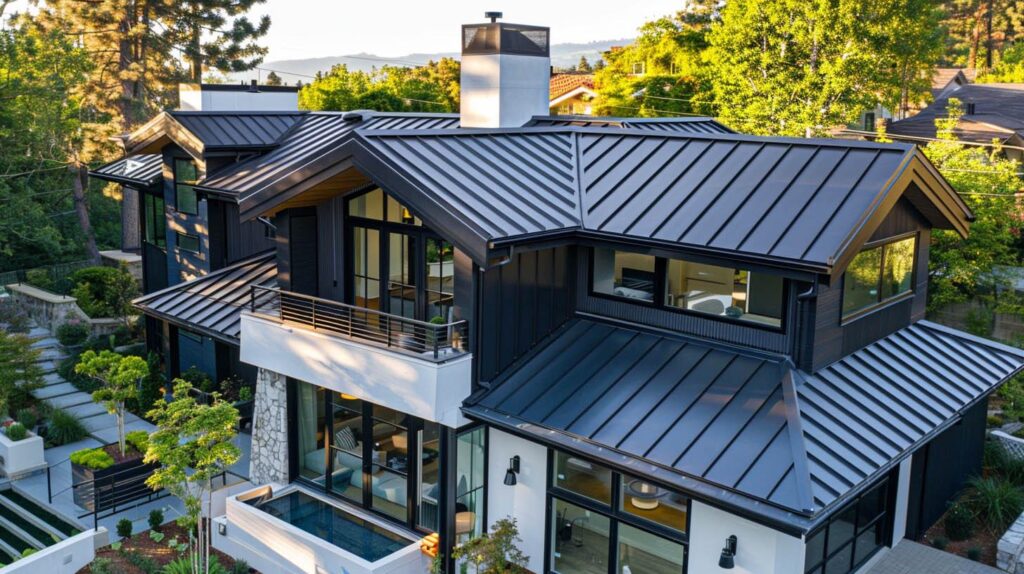
Homes in Eagle Lake, FL
Setting and elevation in Eagle Lake
Eagle Lake sits at about 153 feet above sea level, on 2.6 square miles of land with 1.8 square miles of water inside the city limits. That is the highest water-to-land ratio of any Polk city we work in, and it makes humidity a local building material. A large share of the city’s roofs are within a short distance of the waterline, so the air at the roof surface stays damp, shaded slopes dry slowly, and debris stays put longer than it would inland. Ground is flat, so water leaves a roof and then moves slowly across the lot. The load on an Eagle Lake roof is moisture, sun and wind rather than any weight, and moisture is the one that never takes a season off.
When Eagle Lake’s roofs went on
The median home in Eagle Lake was built in 1982, and the distribution is unusually even across two distant peaks. The 1970s account for 21.8% of the stock and the 1950s for 18.2%, which with the 1960s and earlier makes up 25.6% of homes built before 1970. At the other end, 15.5% went up between 2010 and 2019 and 14.4% between 2000 and 2009, so 31.4% is post-2000. In roofing terms that means a large 1950s and 1970s group on shallow pitches and original details, plus a newer shingle group still in its first covering. Few cities of this size carry both extremes, and the two groups need different trades on the roof: one is detail work, the other is covering work.
The weather these roofs take
The long-record station for this part of Polk County, at Winter Haven’s municipal airport, averages 50.94 inches of rain a year, with 23.07 inches of it in June, July and August. The July normal maximum is 91.7°F, and it records about 106 days a year at or above 90°F. NOAA logged 24 hail events, 31 thunderstorm wind events and 10 tornadoes in Polk County between 2016 and 2024. Around a city that is mostly shoreline, the local variation matters: wind crosses open water with nothing to slow it, rain arrives harder on the lake-facing slopes, and the shaded side of a roof stays wet long after the storm has passed. The county-wide numbers describe the pattern; the lake describes what your particular slope gets.
Who issues the roofing permit in Eagle Lake
Eagle Lake is in Polk County, and inside the city the Building Department administers and enforces the Florida Building Code and the city’s own ordinances. The city states plainly that most work done in Eagle Lake requires a building permit, and it runs an online permitting and inspection portal for applications and inspections. That is the office that will see a roof permit for an Eagle Lake address. Properties outside the city limits fall to Polk County. On a house this age the inspection sequence is worth knowing before the first shingle comes off, because it decides when the roof can be left open. Permit requirements vary by address, so confirm whether your specific repair needs a permit and which inspections it carries before work is scheduled.
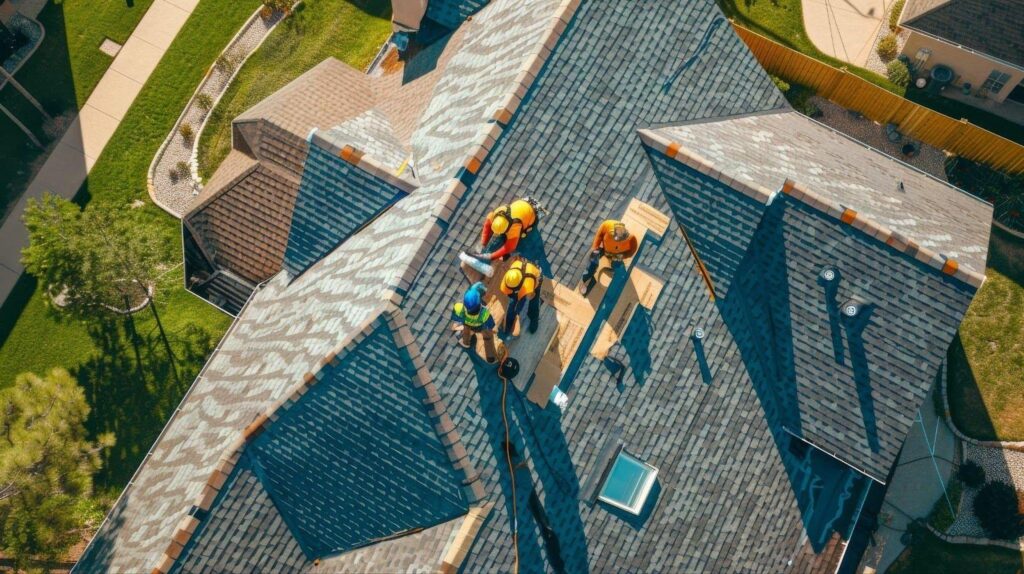
Roofing services in Eagle Lake, FL
The work in Eagle Lake divides by decade. The 1970s and 1950s houses are the repair-first group: wall junctions, vent stacks and chimney details that have been sealed more than once, where rebuilding the detail is the only fix that holds. That is ordinary roof repair work, and where the covering is also tired, the shingle-specific judgement is on the shingle roofing page.
When a covering is finished rather than damaged, the question becomes a strip and re-cover, set out on the roof replacement page. On the lake-facing houses, where a slope stays damp and the surface is sound but worn, a coating system can add years without a full strip; the trade-offs are on the roof coating page.
On the post-2000 houses the covering is still working, so the calls are damage-specific: lifted tabs, a failed vent boot, a leak at a valley. Homeowners planning beyond the current roof ask about metal, covered on the metal roofing page. Tile on the larger newer houses is a separate question, because the tile outlives the underlayment beneath it, as the tile roofing page explains.
Low-slope roofs over garages, porches and outbuildings are membrane work, with EPDM and TPO on their own pages. When a storm opens a roof, stopping the water comes first and is covered on the tarping page; where a wet ceiling has more than one possible source, the inspection page covers how that is narrowed down.
Water coming through the ceiling right now
Why homeowners in Eagle Lake choose us
In a city this size, a roofer who guesses gets found out quickly, because everyone on the street has the same roof. That suits the way we work. On a 1950s or 1970s Eagle Lake house we open the wall detail rather than seal it, because the metal underneath is the part that has failed. On a 2010s house we look at the details that were installed quickly and leave the rest alone. The attic gets inspected before anything is quoted, the photographs get shown, and the cause is written next to the fix. If a roof has years left, that is what we say, even when a new covering would be the larger job.
Why now, before another storm season in Eagle Lake
- 25.6% of Eagle Lake's homes were built before 1970. On a roof of that age the covering has been replaced at least once, and the details underneath are the ones that were there when the house was new.
- The 1970s alone account for 21.8%. A roof replaced on one of those houses in the 1990s is at the end of its second life now.
- Rain arrives in a block: 23.07 inches across three months. A leak found in April is a repair; the same leak in July is a repair plus a ceiling.
- With 1.8 square miles of water inside the city, the shaded and lake-facing slopes stay damp between storms, giving a small entry point far more hours to let water through.
- Insurance underwriting reads roof age, and a roof at fifteen years and past it invites an inspection whatever the surface looks like.
What a roof of this age is already doing
- Detail metal: on a 1950s or 1970s roof the wall and vent flashing is the original, and layers of sealant hide how far it has gone.
- Shallow pitches: the low-slope sections over porches and additions were built to shed water slowly, and they pond when a storm arrives faster than they can drain.
- Moisture at shaded slopes: lake humidity keeps north and east slopes damp, which shows as surface growth and softer sheathing at the edges.
- Sealant strips: on the post-2000 houses the adhesive line between tabs is the first thing to go, and it goes on the windward slope before anywhere else.
- Gutters: on flat ground the gutter line carries more water than it was sized for, and the fascia behind it is where the rot starts.

Repairs that come back
Three repairs repeat in Eagle Lake. The first is a wall detail sealed from the outside while the original metal stayed in place, which holds until rain arrives from the direction the sealant was not worked into. The second is a low porch or addition roof treated like a pitched one, with shingles laid below the slope they are rated for, so water stands and finds the laps. The third is a vent boot or collar replaced without checking the sheathing around it, which is soft on a lake-facing roof and lets the new fitting move. Each is diagnosable at the first visit, and each is cheaper to fix once than twice.
Eagle Lake sits east of Bartow and south-west of Winter Haven, with Auburndale to the north, Lake Alfred and Polk City beyond it, Mulberry to the west and Lakeland further north-west. The map below is centred on the city rather than on an office, because the address that matters on a roof call is yours.
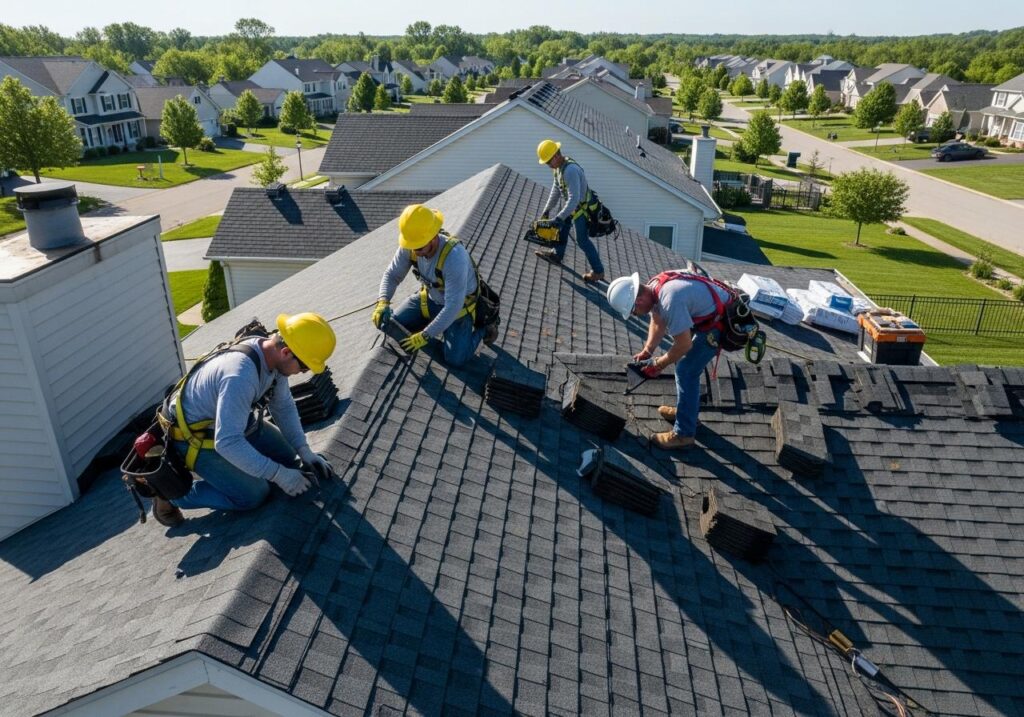
Frequently asked questions about roofs in Eagle Lake
Why does Eagle Lake have both very old and very new roofs?
Because the city grew in two distant campaigns. The 1970s account for 21.8% of the 1,275 homes here and the 1950s for 18.2%, while 31.4% of the stock was built after 2000. With a 1982 median build year, the city has no large middle group from the 1990s to smooth that out. The practical effect is that a 1950s house and a 2015 house can sit on the same street and need completely different work.
How much of Eagle Lake is water, and does it affect a roof?
The city covers 2.6 square miles of land and 1.8 square miles of water, the highest water-to-land ratio of the Polk cities we work in. It affects a roof by keeping it wet: humidity at the surface stays higher, shaded slopes dry slowly, and debris sits longer. That shows up as faster wear on north and east slopes, surface growth on shaded areas, and softer sheathing near the roof edges.
Does a roof repair in Eagle Lake need a permit?
Inside the city, the Building Department administers the Florida Building Code and the city’s ordinances, and the city states that most work done in Eagle Lake requires a building permit, with applications and inspections handled through its online portal. Addresses outside the city limits fall to Polk County. Permit requirements vary by address, so confirm whether your specific repair needs one before work is scheduled.
What is the 15 year roof rule in Florida?
It is an insurance underwriting practice rather than a building code: many carriers inspect, surcharge or decline at or past 15 years of roof age. With a 1982 median build year, most of Eagle Lake’s older housing is well past that line, while 31.4% of the stock built after 2000 is not. What an underwriter wants is evidence of condition or of replacement, which is answerable either way.
How much storm activity does this part of Polk County see?
NOAA recorded 24 hail events, 31 thunderstorm wind events and 10 tornadoes across Polk County between 2016 and 2024. Most hail is small, which bruises shingle mat without breaking the surface, so damage is usually found late. Wind is the more visible agent here, because a roof facing open water meets a gust with nothing to break it.
Can a handyman handle a small roof repair in Eagle Lake?
The line is whether the work changes the roof covering. A vent boot or a lifted tab is a small repair; opening a valley, rebuilding wall flashing or re-covering any part of the surface is permitted work with inspections attached. If the repair touches the covering rather than only what sits beneath it, it belongs with a roofing job.
Where we work around Eagle Lake
Next step: call (863) 304-9132
What happens when you call?
Roof Repair Lakeland FL takes the call, and you describe what you are seeing: where the stain is, when it appears and what sits directly above it. That usually narrows the cause before anyone gets on a roof.
What should I have ready?
The age of the roof if you know it, any paperwork from a previous covering, and photographs of the stain taken while it is wet. Note the time and the weather when it appears.
If water is coming in now, what first?
Move what is under the leak and put a container down. Do not go onto a wet roof. Stopping the entry is discussed on the phone and comes before diagnosis.
What will the first visit produce?
A written scope naming the cause, the repair and anything found in the attic that changes it. If a repair will not hold, that is said at the same visit rather than discovered later.
What if the repair needs a permit?
Inside Eagle Lake the permit and inspections come from the city’s Building Department, which runs applications and inspections through its online portal. You are told which inspections the permit carries before work begins.
What if the roof needs more than a repair?
Then the conversation moves to a strip and re-cover, and the decision waits until the deck has been opened. A replacement scoped from the driveway is a guess with a number attached.