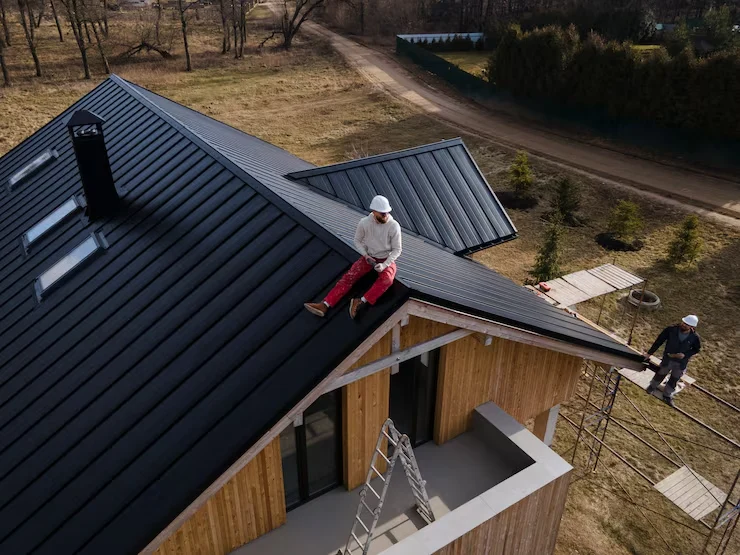
Owning a home in Lakeland means your roof carries two jobs at once. It keeps the weather out, and it decides much of what your insurer will cover, charge and renew. Florida has written specific rules about roofs into state law, from roof age to claim deadlines to who may approach you after a storm. This guide explains the roof insurance Florida law sets out, in plain language, and how to protect your roof and your policy through storm season.
Storm season in Florida runs from June 1 to November 30, with most activity from mid-August to mid-October, according to the National Hurricane Center. Lakeland has seen what a direct hit brings. During Hurricane Milton in October 2024, the National Weather Service recorded Polk County gusts generally between 80 and 90 mph and a record 8.93 inches of rain in one day at Lakeland Linder International Airport (NWS Tampa Bay).
Nothing here is legal advice. Every rule below is a summary of what the source says. Confirm how it applies to your own policy with your insurer, and with an attorney if a claim is disputed.
Roof Insurance Florida Homeowners Should Understand
Florida law treats the roof as its own insurance topic. State statutes set rules on how insurers treat older roofs, what discounts they must offer for wind-resistant features, what hurricane deductibles look like and how fast claims must be handled. Knowing those rules helps you plan repairs before an insurer’s renewal notice sets the timing for you.
The rules covered in this guide come from the Florida Statutes and from Citizens Property Insurance Corporation:
| Topic | Where the rule comes from | Covered in |
|---|---|---|
| Roof age and renewals | s. 627.7011, Florida Statutes | Roof age section |
| Inspections insurers ask for | Citizens inspection requirements | Inspections section |
| Wind mitigation discounts | s. 627.0629, Florida Statutes | Wind mitigation section |
| Hurricane deductibles | s. 627.701, Florida Statutes | Deductibles section |
| Claim deadlines | s. 627.70132 and s. 627.70131 | Claims section |
| Contractor solicitation and assignment of benefits | s. 489.147 and s. 627.7152 | Contractors section |
| Roof repair code rules | s. 553.844(5), added in 2022 | Replacement costs and 25% rule section |
| State grants for roof upgrades | s. 215.5586 | State grants section |
If your roof is leaking right now, start with our guide to roof leaks in Lakeland instead. It covers what is urgent and what can wait.
Roof Age and Your Homeowners Policy
Florida law limits how an insurer can use roof age against you. An insurer may not refuse to issue or renew a homeowners policy solely because the roof is less than 15 years old. For older roofs, the homeowner gets the right to an inspection before the insurer can require replacement.
The details are in section 627.7011(5) of the Florida Statutes (s. 627.7011):
- Roof less than 15 years old. The insurer may not refuse to write or renew the policy based solely on roof age.
- Roof 15 years or older. The insurer must allow the homeowner to have the roof inspected by an authorized inspector, at the homeowner’s expense, before requiring a replacement.
- Inspection shows five or more years of life left. The insurer may not refuse or non-renew based solely on roof age.
What the statute does not do is guarantee coverage. An insurer can still act on the roof’s actual condition, and a roof in poor shape can be a problem at any age. Ask your insurer how it applies these rules to your policy, and keep your roof’s installation date and permit records where you can find them. Florida’s 15-year roof rule covers what to do if a renewal notice raises your roof’s age.
The Inspections Insurers Ask For
Two inspections come up again and again for Florida homeowners: the 4-point inspection and the wind mitigation inspection. A 4-point inspection looks at the condition of the home’s major systems, including the roof. A wind mitigation inspection documents features that help a home resist wind, which can lower your premium.
Citizens Property Insurance Corporation publishes its own requirements. According to Citizens:
- 4-point inspection. “Citizens requires a four-point inspection for all property owner, dwelling and mobile home applications for properties more than 20 years old.”
- Older roofs. Roofs older than 25 years for shingle or similar roofs, or 50 years for tile, slate, clay, concrete or metal, “require documentation showing at least five years of remaining useful life.”
Private insurers set their own rules, so ask yours which inspections it wants and how recent they must be. What a 4-point inspection checks on your roof explains the roof portion of that report. An earlier article covers why regular roof inspections matter outside the insurance process.
Wind Mitigation Features and Insurance Discounts
Florida law requires insurers to offer discounts for features that reduce wind damage. A wind mitigation inspection is how you prove your home has them. Many of the features that matter most are part of the roof: how the roof deck is attached, how the roof is tied to the walls, and the roof covering itself.
Section 627.0629 of the Florida Statutes says a residential property insurance rate filing “must include actuarially reasonable discounts, credits, or other rate differentials” for homes with features “demonstrated to reduce the amount of loss in a windstorm” (s. 627.0629). The statute names categories including wind uplift prevention, roof strength, roof covering performance and roof-to-wall strength. It also requires insurers to show their available hurricane mitigation discounts on their websites.
How much any discount is worth depends on your insurer and your home. Ask your insurer for its discount schedule rather than relying on a figure from an advertisement. Wind mitigation inspections and the hidden roof features that matter walks through each roof feature on the inspection.
Hurricane Deductibles in Florida
A Florida homeowners policy can carry a separate hurricane deductible, and it is often written as a percentage of the dwelling coverage rather than a flat amount. Florida law sets the options insurers must offer. Knowing yours before a storm tells you how much of a roof repair you would pay yourself.
Under section 627.701(3)(a) of the Florida Statutes, insurers must offer hurricane deductibles of $500, 2%, 5% and 10% of the policy’s dwelling limits. The $500 option does not have to be offered for higher-value dwellings (s. 627.701).
A percentage deductible grows with the dwelling limit. On a high limit, even the 2% option can be more than a typical leak repair costs. Check the declarations page of your policy for your hurricane deductible, and ask your insurer or agent if it is unclear.
Roof Claims and Florida Time Limits
Florida sets firm time limits on roof claims for both sides. You must give your insurer notice of a new or reopened claim within one year of the date of loss, and a supplemental claim within 18 months. Insurers in turn must acknowledge, investigate and decide claims on set timelines.
According to the Florida Statutes:
- Your notice. New or reopened claims within one year of the date of loss; supplemental claims within 18 months (s. 627.70132).
- The insurer’s response. Acknowledge a claim communication within 7 days. Begin investigating within 7 days of receiving proof of loss, and complete any physical inspection within 30 days. Pay or deny within 60 days of notice, with extensions only for factors beyond the insurer’s control (s. 627.70131).
The question most roof claims turn on is whether the damage came from a covered event, such as a windstorm, or from wear and tear. Homeowners insurance coverage for roof leaks in Florida explains that line and what documentation helps. Confirm your own policy’s terms with your insurer.
Contractors, Free Inspections and Signing Over a Claim
Florida law sets clear limits on how contractors can approach you about a roof claim. A contractor may not offer you gifts, cash or a waiver of your deductible in exchange for a roof inspection or a claim. For policies issued since January 1, 2023, you also cannot sign your claim benefits over to a contractor.
The two statutes:
- Solicitation. Section 489.147 prohibits a contractor from offering a rebate, gift, gift card, cash, coupon or a waiver of any insurance deductible in exchange for a roof inspection or for making an insurance claim. Penalties reach $10,000 per violation (s. 489.147).
- Assignment of benefits. For residential and commercial property policies issued on or after January 1, 2023, post-loss benefits may not be assigned, and any attempted assignment is void (s. 627.7152).
In practice, that means a contractor offering to “take care of the insurance” by having you sign over your claim is asking for something the law does not allow on newer policies. Read anything you are asked to sign, and ask your insurer or an attorney if a document is unclear.
Roof Records Worth Keeping
Good records make every insurance conversation easier, from a renewal notice to a storm claim. Keep the roof’s installation date, permit, invoices, inspection reports and dated photos in one place, with a copy stored away from the house. Records answer the age and condition questions before an insurer has to guess.
The table below lists the records that line up with the rules in this guide:
| Record | Why it helps | Rule it relates to |
|---|---|---|
| Roof installation date and permit | Proves the roof’s age, and whether it was built to the 2007 code or later | s. 627.7011 roof age; s. 553.844(5) 25% rule |
| Most recent roof or 4-point inspection report | Shows remaining useful life and condition | s. 627.7011; Citizens inspection requirements |
| Wind mitigation inspection report | Documents the features that can qualify for a discount | s. 627.0629 |
| Repair invoices and warranty papers | Show the roof was maintained, not neglected | The storm damage vs wear and tear question on a claim |
| Dated photos of the roof and ceilings | Show condition before and after a storm | Claim notice within one year (s. 627.70132) |
| Your policy declarations page | Shows your hurricane deductible | s. 627.701 |
Keep digital copies somewhere you can reach from a phone, such as email or cloud storage. After a storm, the paper copies may be in the part of the house that got wet.
Getting Your Roof Ready Before a Storm
The best time to prepare a roof is before storm season starts on June 1, not when a storm is already forecast. Preparation is mostly paperwork and inspection, not climbing a ladder. Know your roof’s age and condition, document it with photos, and get any repairs done before a storm finds the weak spots.
A simple pre-season list:
- Find your roof records. Installation date, permit, warranty and any repair invoices.
- Photograph the roof and ceilings from the ground and from inside, with dates. These help show the roof’s condition before a storm.
- Read your policy’s declarations page for your hurricane deductible and roof coverage terms.
- Book an inspection if the roof is older or has had leaks, and get repairs done early.
- Have trees near the roof checked by a qualified tree professional.
Hurricane season roof prep for Polk County homes covers each step in more detail, all of it from the ground.
Staying Safe When the Roof Leaks During a Storm
If water comes in during a storm, your safety comes before the roof. Water near light fixtures, outlets or the electrical panel, or a ceiling that sags, means leave that room and keep everyone out. Call 911 if there is any risk of collapse, fire or electric shock. Never go onto the roof during a storm.
Ready.gov’s guidance is direct: “Do not touch electrical equipment if it is wet or if you are standing in water. Turn off the electricity to prevent electric shock if it is safe to do so” (Ready.gov).
Once everyone is safe, contain the water with buckets and towels, move belongings, and take photos. What to do if your roof is leaking during a storm covers the full sequence.
After the Storm Passes
The days after a storm decide how much a roof problem ends up costing. Document the damage, protect the inside of the home, and get the roof checked before the next rain. Drying wet materials quickly matters, because the EPA ties mold growth to the first 24 to 48 hours.
The U.S. Environmental Protection Agency advises that “it is important to dry water-damaged areas and items within 24-48 hours to prevent mold growth” (EPA). If you see or smell mold in the attic after a leak, mold in the attic after a roof leak explains the signs and when to call a professional.
If the roof is open to the weather, a temporary tarp may be needed until repairs can be made. Tarping means working on a wet roof, which is professional work. Roof tarps after a storm explains how long they last and who should install one. An earlier article also covers what to do after hail, wind and heavy rain.
When you are ready for an inspection, the Roof Repair Lakeland FL page on storm damage roof repair in Lakeland explains what the visit covers.
State Grants for a Stronger Roof
The My Safe Florida Home program offers state grants for upgrades that help a home resist hurricanes, including several roof items. Florida law sets who qualifies and how the grant is matched. The program’s live status changes, so check the official site before planning around it.
According to section 215.5586 of the Florida Statutes (s. 215.5586):
- Eligibility. A homestead-exempt home, with a building permit applied for before January 1, 2008, and an insured value of $700,000 or less. Low-income homeowners are exempt from the value cap.
- The match. The homeowner pays one dollar for every two dollars the state provides, up to a state maximum of $10,000. Low-income homeowners can receive up to $10,000 with no match.
- Timing. Work must be finished within one year of grant approval.
The official program site lists roof-related upgrades including roof-to-deck attachment, roof-to-wall connections and secondary water resistance. Apply through the official site, mysafeflhome.com. Search results also show other websites with similar names, so check the address before entering any details. My Safe Florida Home grant and what it pays for on your roof covers the roof items in detail.
Mobile and Manufactured Home Roofs
Mobile homes are a large share of local housing, and their roofs come with their own options and insurance questions. In Lakeland, 17.3% of housing units are mobile homes, and in Polk County the share is 18.6%, according to the Census Bureau’s American Community Survey 2024 one-year estimates.
Those figures come from ACS table B25024, units in structure (via Census Reporter). Citizens includes mobile homes in its 4-point inspection requirement for properties more than 20 years old, as quoted above.
Options for a mobile home roof include a roof-over, a coating or a full replacement. Mobile home roof over, coating or replacement compares the three.
Replacement Costs and Florida’s 25% Rule
When a roof reaches the end of its life, or a storm damages a large section, two questions follow. What will a new roof cost, and does a large repair force a full replacement? Florida changed the second answer in 2022 for roofs built to the 2007 Florida Building Code or later.
On cost, Fixr publishes a national average of $10,000 for roof replacement, with a typical range of $7,500 to $14,000 (Fixr, updated February 4, 2026). These are national estimates, not Lakeland or company pricing. Roof replacement cost in Florida explains what those numbers leave out.
On the 25% rule, Senate Bill 4-D, signed on May 26, 2022 as chapter 2022-269, Laws of Florida, added subsection (5) to section 553.844 (Laws of Florida, ch. 2022-269). If a roof was built, repaired or replaced to the 2007 Florida Building Code or later, and 25% or more of it is repaired, replaced or recovered, only the repaired portion has to meet the current code. Florida’s 25% roof rule and re-roof permits covers which roofs qualify. Your local building department makes the call on any specific roof.
Frequently Asked Questions
What is the new law in Florida about roofs?
One major change came in 2022. Senate Bill 4-D, chapter 2022-269, Laws of Florida, added section 553.844(5). For roofs built to the 2007 Florida Building Code or later, repairing 25% or more of the roof requires only the repaired portion to meet current code (ch. 2022-269). Other roof laws may apply too, so confirm with your building department.
What are the current laws regarding roof replacement in Florida?
Several statutes apply. Section 627.7011 limits how insurers use roof age. Section 553.844(5) sets the 25% repair rule for roofs built to the 2007 code or later. Section 489.147 bans contractor gifts and deductible waivers tied to claims (s. 489.147). Your building department confirms permit requirements.
What is the 15 year roof rule in Florida?
Under section 627.7011, an insurer may not refuse to issue or renew a homeowners policy solely because the roof is less than 15 years old. For roofs 15 or older, the homeowner may get an inspection first, and five or more years of remaining life blocks a refusal based on age alone (s. 627.7011).
What is the 25% roof rule in Florida?
Under a 2022 change to state law, if a roof was built, repaired or replaced to the 2007 Florida Building Code or later, repairing 25% or more of it requires only the repaired portion to meet the current code. The rule is section 553.844(5) of the Florida Statutes (ch. 2022-269). Your local building official decides how it applies.
Can you insure a 20 year old roof in Florida?
Often, yes, depending on the roof and the insurer. Citizens asks for documentation showing at least five years of remaining life only for shingle roofs older than 25 years, or tile, slate, clay, concrete or metal roofs older than 50 (Citizens). Private insurers set their own rules, so ask yours.