When a storm tears shingles loose and water starts finding its way inside, a roof tarp may be the first thing that comes to mind. A tarp is a temporary cover that keeps rain out until the roof can be repaired. It is not a repair, and fitting one means working on a wet, damaged roof, which is a job for a professional.
This guide explains what a tarp does, why putting one on is work at height that belongs to a trained crew, how long the federal Blue Roof program says its covers are built to last, and how Florida law treats contractors who offer “free” tarps or inspections. It is a plain-language summary of the sources, not legal or insurance advice.
A Roof Tarp Is a Temporary Cover
A roof tarp is a sheet of strong plastic fastened over a damaged area so rain stays out until a proper repair is made. It buys time. It does not fix decking, underlayment or flashing, and it is never meant to stay on as the roof. Plan the real repair from the day the tarp goes on.
The federal program that installs these covers after major disasters describes the job plainly. According to a 2017 FEMA fact sheet on USACE Blue Roofs, “Operation Blue Roof provides a temporary covering of reinforced blue plastic sheeting using strips of wood secured to the roof with nails or screws to help reduce further damage to property until permanent repairs can be made.”
Three parts of that sentence are worth noticing:
- Temporary covering. The program itself calls it temporary, not a fix.
- Reinforced sheeting and wood strips. The sheet is held by wood battens fastened into the roof, not just weighted down.
- Until permanent repairs can be made. The cover exists to protect the home while a repair is arranged.
That is the right way to think about any tarp on any roof. It is a bridge between the storm and the repair crew.
Putting a Tarp on a Roof Is Work at Height
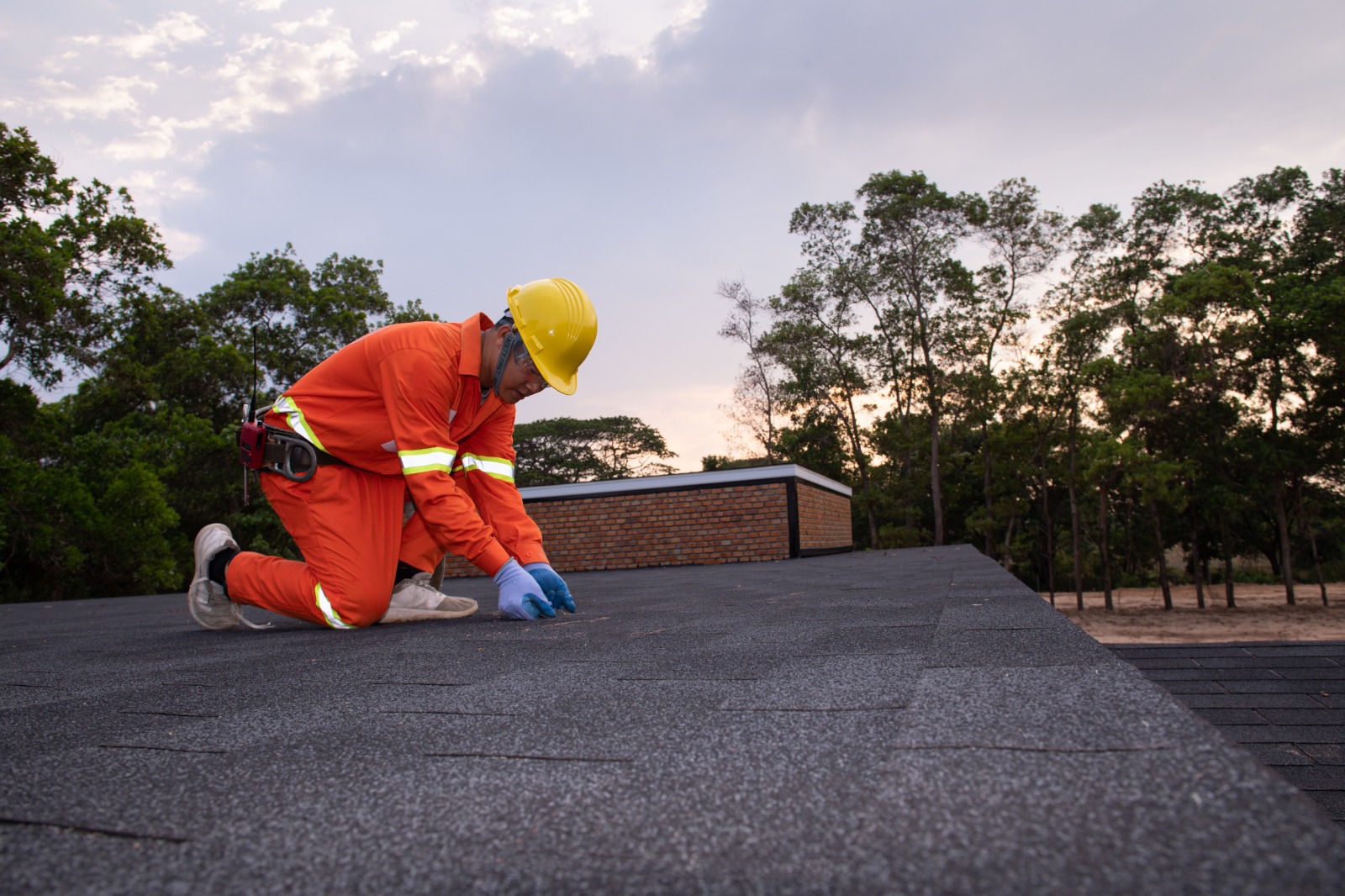
Putting a tarp on a roof means climbing a ladder and working on a slope that is often wet, damaged and covered in loose debris. Falls are the leading cause of death among construction workers, according to the CDC. That is why this guide does not give a homeowner how-to for tarping. Call a professional.
The CDC’s National Institute for Occupational Safety and Health puts it in one line: “Falls are the number one cause of construction worker fatalities” (CDC NIOSH). The same page names unprotected edges and unsafely positioned ladders among the common fall hazards.
Those hazards are worse after a storm than on a dry, calm day:
- Wet surfaces. Rain-soaked shingles and plastic sheeting are slippery underfoot.
- Hidden damage. Decking under missing shingles may be soft or broken and may not hold your weight.
- Wind. A large sheet of plastic catches gusts and can pull a person off balance.
- Downed lines. Storms bring down power lines, and a ladder or wet tarp near one is an electrical hazard.
A trained crew works with fall protection and the right equipment, and it can see the damage while it covers it. If you are unsure whether anyone should go up at all, the answer is to wait for a professional.
Steps to Take Inside While You Wait for a Crew
While water is coming in and you are waiting for help, everything useful happens inside the house and at ground level. Keep people out of rooms with a wet or sagging ceiling, protect belongings, and photograph the damage. If water is near outlets or lights, or a ceiling is bulging, leave the room and call 911 or the utility.
Safety comes first, then the house. Inside, and only where it is safe to do so:
- Leave any room with a sagging or bulging ceiling and keep children and pets out. Call 911 if anyone could be hurt.
- Stay away from water near electrical outlets, fixtures or the panel. Call the utility or an electrician rather than touching anything.
- Catch dripping water with buckets or bins where the ceiling is intact and the floor is safe to stand on.
- Move furniture, rugs and electronics away from the wet area.
- Photograph and video everything, inside and out from the ground, with the date visible on your phone.
- Call a roofing professional to inspect the damage and put on a temporary cover.
- Call your insurer to report the damage and ask what it needs from you.
Do not climb into the attic during a storm, and do not go onto the roof. What to do when your roof is leaking during a storm covers the first hour inside the house in more detail.
Roof Tarp Lifespan and the 30-Day Figure
The only duration we found in an official source comes from the federal Blue Roof program. A 2017 FEMA fact sheet says Blue Roofs “are designed to last for 30 days.” A second 2017 FEMA release says the cover “should protect property for a minimum of 30 days.” No source we read publishes a lifespan for a store-bought tarp.
Here is what the two FEMA pages say, side by side:
| Source | What it says about duration |
|---|---|
| 2017 FEMA fact sheet on Blue Roofs | “Blue Roofs are designed to last for 30 days.” |
| 2017 FEMA release on the first Blue Roof installed | Operation Blue Roof “should protect property for a minimum of 30 days” while permanent repairs are arranged. |
Those figures describe the program’s own reinforced sheeting fastened with wood strips. They are not a promise for any other tarp, fastened any other way.
Other figures online range from weeks to years, but we found no published source behind them. The safer reading is the one the program itself gives: a tarp is a temporary measure that holds until the roof is repaired.
What this means in practice:
- Book the repair when the tarp goes on, not when the tarp starts to fail.
- Check the cover from the ground after every storm or windy day. A flapping edge or a sheet that has shifted means water can get under it.
- Call the crew back if you see damage. Do not climb up to fix it yourself.
The Kind of Cover Used on Storm-Damaged Roofs
The cover that the federal program uses is reinforced blue plastic sheeting held down by strips of wood fastened into the roof with nails or screws. That is the clearest published description of how an emergency roof tarp is meant to be put on. It also shows why fitting one properly is a roofing job, not a quick fix.
A tarp that is only weighted with bricks or tied at the corners can lift in the next gust. The program’s method fixes the sheet along its edges with wood strips, so wind has less to grab (FEMA).
When a crew covers your roof, it is reasonable to ask:
- What sheeting will you use, and how will it be fastened?
- How far past the damaged area will the cover reach?
- Will the fasteners make new holes that the repair will need to address?
- Will you photograph the damage before covering it, so the record survives for your claim?
Ask for the answers in writing on the invoice. A good crew will explain what it did and what the permanent repair will need.
Operation Blue Roof After a Declared Disaster
Operation Blue Roof is a federal program run by the U.S. Army Corps of Engineers with FEMA after major declared disasters. A 2017 FEMA release describes it as “a free service to homeowners.” It is not available after every storm, and it has eligibility rules covering the home, the roof framing and the roof material.
According to a 2017 FEMA release, when the program runs:
| Topic | What FEMA said in 2017 |
|---|---|
| Who runs it | The U.S. Army Corps of Engineers in partnership with FEMA and the local government. |
| Cost | “This is a free service to homeowners.” |
| Home | It must be a primary residence. |
| Roof framing | “The residence has sufficient roof framing intact (more than 50 percent) to support the plastic sheeting.” |
| Excluded roofs | “Roofs composed of materials such as slate, asbestos or clay tile, or other material or damaged metal framing which would be exceptionally difficult to repair.” |
| Access | The owner signs a Right of Entry form to let the program’s contractors onto the property (FEMA fact sheet). |
FEMA also gives a warning worth remembering: “This is a free service, if asked to pay it is not Operation Blue Roof.” Anyone asking for money in the program’s name is not part of it.
The program runs only when it is activated for a disaster. After a storm, check official county and FEMA announcements to see whether it is open in your area. If it is not, a private roofing contractor is the route to a temporary cover.
Free Tarp Offers and Florida Contractor Rules
Florida law limits what contractors may offer to win roof work tied to insurance. Under section 489.147, a contractor may not offer a gift, cash, a coupon, a waiver of your insurance deductible or anything else of value for a roof inspection or for making an insurance claim. Treat a “free” offer with strings attached as a warning sign.
Section 489.147 of the Florida Statutes (FindLaw mirror) sets out several limits:
- No prohibited advertisements. A contractor may not solicit a residential property owner through a prohibited advertisement.
- No gifts for an inspection or claim. A contractor may not offer a rebate, gift, gift card, cash, coupon, waiver of any insurance deductible, or other thing of value in exchange for a roof inspection or for making an insurance claim.
- No referral payments where insurance proceeds pay for the work.
- Penalties. The statute allows a penalty of up to $10,000 per violation.
A tarp offer that comes bundled with a request to sign a replacement contract, or to hand over your insurance claim, deserves a pause. Read anything before you sign it, and keep your claim in your own hands.
Before anyone climbs onto your roof, check that the contractor is properly licensed. How to check a roofing contractor’s Florida license walks through the state lookup. If something about an offer seems wrong, ask an attorney how the statute applies.
Tarps and Your Homeowners Insurance Claim
Your insurer may want to know about storm damage quickly and may expect you to protect the home from further damage. What a policy covers, including the cost of a temporary cover, depends on its wording. Call your insurer, ask what it needs, and keep every receipt and photo from the tarp job.
Practical steps that help any claim:
- Report the damage promptly and write down the claim number, date and the name of the person you spoke to.
- Ask the insurer in writing whether the cost of temporary protection is covered under your policy.
- Keep the invoice for the tarp, with a description of what was covered and how.
- Keep photos from before and after the cover went on.
- Do not throw away damaged materials until the insurer says you can.
We do not promise any coverage outcome, and neither should a contractor. Whether homeowners insurance covers a roof leak in Florida explains how policies tend to separate storm damage from wear and tear. The wider set of rules, from hurricane deductibles to claim deadlines, is in our guide to roof insurance and hurricanes in Florida.
Getting a Temporary Cover Put On in Lakeland
After a storm in Lakeland or anywhere in Polk County, the right first call for a damaged roof is a roofing professional who can inspect it and fit a temporary cover safely. Ask what the cover will be, how it will be fastened, and when the permanent repair can be scheduled.
When you call a crew for an emergency roof tarp, have this ready:
- Your address and a contact number that will work if power is out.
- Where the water is coming in, described from inside the house.
- Photos taken from the ground and from inside.
- Your insurer’s name and claim number, if you have already reported the damage.
For storm damage that needs a fast temporary cover, the Roof Repair Lakeland FL page on emergency roof repair in Lakeland explains what an emergency visit covers. Whoever you call, check the license first and read every document before signing.
Frequently Asked Questions
Can you tarp your own roof?
Putting a tarp on a roof is work at height on a wet, damaged surface, and the CDC states that “Falls are the number one cause of construction worker fatalities” (CDC NIOSH). For that reason this guide recommends staying off the roof and calling a roofing professional to put on a temporary cover.
Can I put a tarp on my roof to stop leaks?
A tarp can slow a leak until the roof is repaired, but fitting one safely is a job for a professional crew with fall protection. While you wait, work inside: keep people out of rooms with sagging ceilings, catch drips, move belongings, and photograph the damage (CDC NIOSH).
How long will a heavy duty tarp last on a roof?
No source we read publishes a lifespan for a store-bought tarp. A 2017 FEMA fact sheet on the federal Blue Roof program says its covers “are designed to last for 30 days” (FEMA). Treat any tarp as a temporary measure, and book the permanent repair when the cover goes on rather than waiting.
What is a roof tarp?
A roof tarp is a temporary sheet of strong plastic fastened over storm damage to keep rain out until permanent repairs are made. The federal program describes reinforced blue plastic sheeting held by wood strips secured with nails or screws (FEMA). It protects the home but does not repair the roof.
What type of tarp is best for a roof?
The clearest published standard is the federal Blue Roof method: reinforced plastic sheeting held down with wood strips nailed or screwed into the roof (FEMA). Ask any crew which sheeting it uses and how it fastens it, and get the answer on the invoice.