A leak over one slope raises two questions at once: do you need a permit, and does the whole roof have to be brought up to today’s code? The roof permit Florida law sets starts with section 553.79 of the Florida Statutes. The 25% roof rule question was changed by a state law passed in 2022.
This guide covers what those two laws say, in plain words. It does not cover city or county permit steps, fees or forms, because those are set locally. It is a summary of the statutes, not legal advice. Before any roof job, confirm the rules with your local building department and your insurer.
Florida Law Requires a Roof Permit for Repair Work
Section 553.79 of the Florida Statutes makes it unlawful to repair or alter a building without first getting a permit from the appropriate enforcing agency. The statute names repair alongside building, altering and demolishing. That enforcing agency, not a contractor or an insurer, decides what a particular roof job needs.
The key sentence reads: “it shall be unlawful for any person, firm, corporation, or governmental entity to construct, erect, alter, modify, repair, or demolish any building within this state without first obtaining a permit therefor from the appropriate enforcing agency” (s. 553.79, Florida Statutes).
Three points follow from that text:
- Repair is named. The statute lists repair in the same breath as new construction, so a repair job is not outside it by default.
- The permit comes first. The words “without first obtaining” put the permit before the work, not after it.
- The enforcing agency decides. The statute leaves the permit to the appropriate enforcing agency. That is the office that can tell you whether your job needs one.
The statute also gives the enforcing agency the power to revoke a permit when work does not conform to the Florida Building Code. Which roof jobs need a permit in your area, and what the process looks like, are questions for your local building department. Confirm with your local building department before work starts.
The 25% Roof Rule in Plain Words
The 25% roof rule is the question of how much of a roof must meet the current building code when part of it is repaired, replaced or recovered. Since a 2022 law, section 553.844(5) of the Florida Statutes answers that question for roofs built, repaired or replaced to the 2007 Florida Building Code or later.
For those roofs, the answer is short. When 25 percent or more of the roofing system or roof section is repaired, replaced or recovered, only the portion that is repaired, replaced or recovered must meet the current code (Chapter 2022-269, Laws of Florida).
| Situation | What section 553.844(5) says |
|---|---|
| Roof built, repaired or replaced to the 2007 Florida Building Code or later, and 25% or more is repaired, replaced or recovered | Only the repaired, replaced or recovered portion must meet the current Florida Building Code |
| Roof not built to the 2007 code or later | Not covered by this subsection. Ask your building official what applies |
Two words in the rule do a lot of work. “Recovered” covers putting a new roof covering over a section, not just tearing it off. “Portion” means the work area, not the whole roof. Confirm with your local building department how the rule applies to your roof before you sign a contract.
The 2022 Change From Senate Bill 4-D
The 2022 change came from Senate Bill 4-D, which became Chapter 2022-269, Laws of Florida. Section 1 of that law added subsection (5) to section 553.844. The Governor approved it on May 26, 2022, and the law took effect when it became law. It is one roof change among Florida’s laws, not the only one.
The full subsection has three parts (Chapter 2022-269, Laws of Florida):
- The exception itself. For a roof built, repaired or replaced to the 2007 Florida Building Code or later, when 25 percent or more is repaired, replaced or recovered, only that portion must meet the current code.
- A duty on the Florida Building Commission. The commission must adopt the exception by rule and incorporate it into the Florida Building Code.
- A bar on local changes. A local government may not adopt an administrative or technical amendment to the exception.
The same session law has many other sections. This guide covers only section 1, the roof code change. Other roof laws passed after 2022 were not reviewed here, so treat this as one change rather than a full list. Confirm with your local building department and your insurer which rules apply on the date of your job.
Roofs Built Before the 2007 Code
Section 553.844(5) covers only roofs built, repaired or replaced to the 2007 Florida Building Code or a later edition. It does not say what applies to an older roof. If your roof was last done before that code, the subsection gives no answer, and your local building official is the person to ask.
That gap matters locally because so much of the housing is older. In Lakeland, 70.8% of homes were built before 2000, and in Polk County the share is 55.2%, according to the Census Bureau’s American Community Survey 2024 one-year estimates, table B25034 (via Census Reporter). The survey groups homes by decade, so it cannot show how many predate 2007. And a house can have a far newer roof than its build year, so the roof’s own permit date is what counts.
Useful steps if you are unsure which code your roof was built to:
- Find the last roof permit. The permit record for the last full replacement shows when the work was done.
- Check the final invoice. A contractor’s invoice for the last re-roof gives a date and scope.
- Ask the building official. Bring the address and any dates you have, and ask which code the existing roof is treated as meeting.
Confirm with your local building department what applies to a roof that predates the 2007 code, and tell your insurer what you learn.
Local Governments and the 25% Rule
Under section 553.844(5), a local government may not adopt an administrative or technical amendment to the 25% roof exception. The rule is set at state level, and the Florida Building Commission must write it into the Florida Building Code. Local building departments still issue permits and inspect the work.
That split is worth understanding before you call anyone:
| Question | Who answers it |
|---|---|
| Does the 25% roof exception exist, and what does it say? | State law, section 553.844(5) (Chapter 2022-269) |
| Who adopts it into the building code? | The Florida Building Commission, by rule |
| Can a city or county amend the exception? | No. The subsection bars administrative or technical amendments to it |
| Does my job need a permit, and how do I apply? | Your local building department, under section 553.79 |
This guide makes no claim about permit steps in any city or county, including fees and forms. Those come from the enforcing agency. Confirm with your local building department how it handles a partial roof job.
Partial Roof Repairs and Code Questions
A partial roof repair raises two separate questions. Section 553.79 decides whether you need a permit for the work, through the enforcing agency. Section 553.844(5) decides, for roofs built to the 2007 code or later, how much of the roof must meet the current code when 25 percent or more is done.
An insurer’s rules on roof age and condition are a third, separate question that neither statute sets. Before a partial repair starts, ask the contractor to state in writing how much of the roof the job covers, and whether a permit will be pulled. Then confirm with your local building department and your insurer.
Records to Keep From a Permitted Roof Job
The records from a permitted roof job are proof of what was done, when, and to which code. Keep the permit, the inspection results, the contract and the final invoice together. They answer the questions a building official, an insurer or a future buyer will ask about the roof.
A simple file for each roof job:
- The permit, with its number and issue date.
- The inspection records from the enforcing agency.
- The signed contract showing the scope of work and the roof area covered.
- The final invoice, with materials and the date the work finished.
- Photos of the roof before and after, taken from the ground or by the contractor.
- Insurer correspondence about the roof, with dates.
A permit showing the roof was replaced to the 2007 code or later is the record that matters for the 25% rule.
Permit Lines on a Roof Estimate
A written roof estimate should say whether a permit is part of the job and who is responsible for getting it. If the estimate is silent, ask before you sign. Section 553.79 puts the permit before the work, so the question belongs at the estimate stage, not after the crew arrives.
Things to look for on the paperwork:
- A permit line. Whether the contractor will pull the permit, and whether its cost is included.
- The roof area. How much of the roof the job covers, which matters for the 25% rule.
- Inspection timing. When inspections are expected during the work.
Reading a roof estimate line by line covers the other items on a quote and the gaps worth asking about. Confirm the permit requirement for your job with your local building department.
Tile Roofs and Partial Repairs
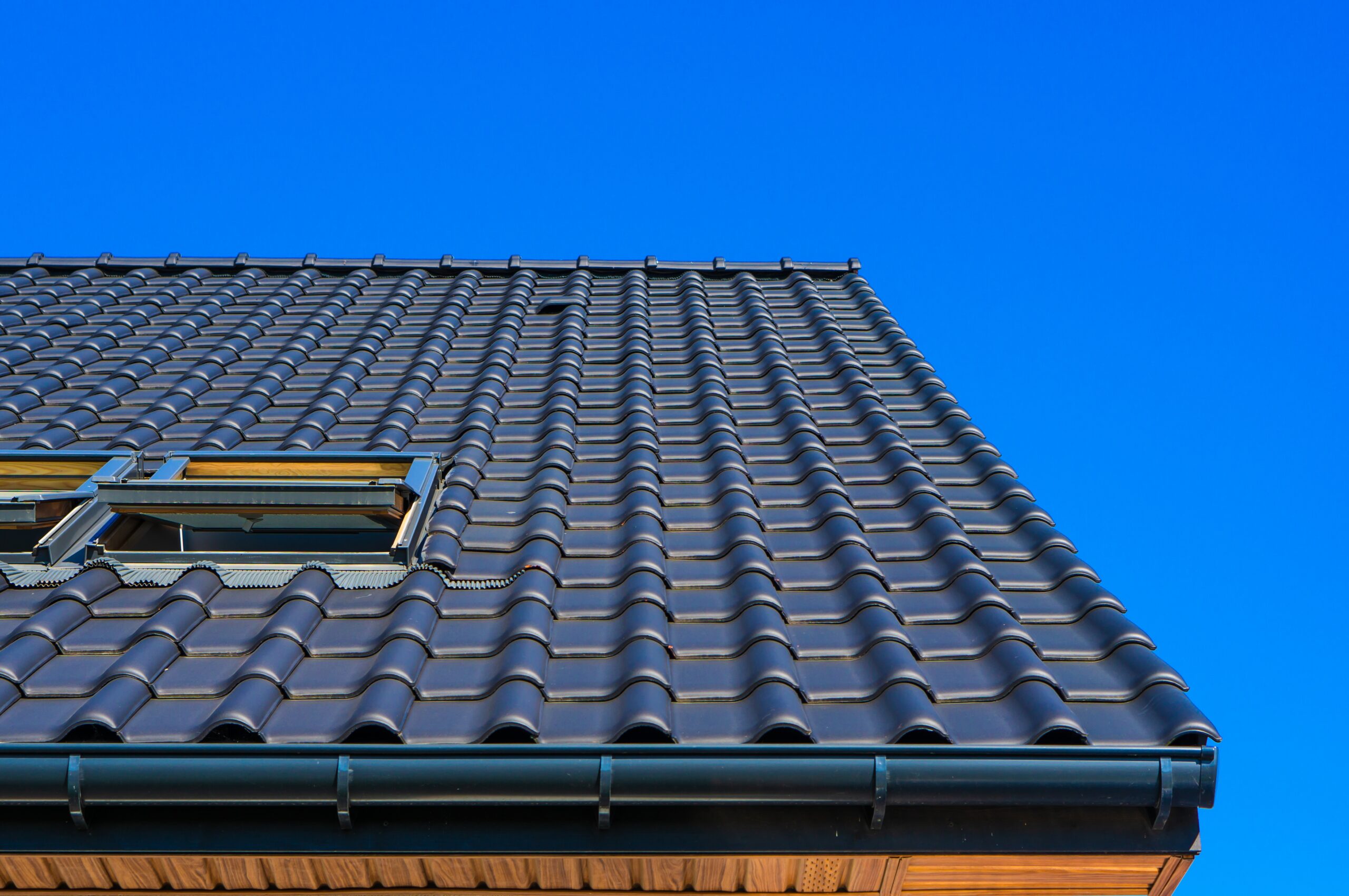
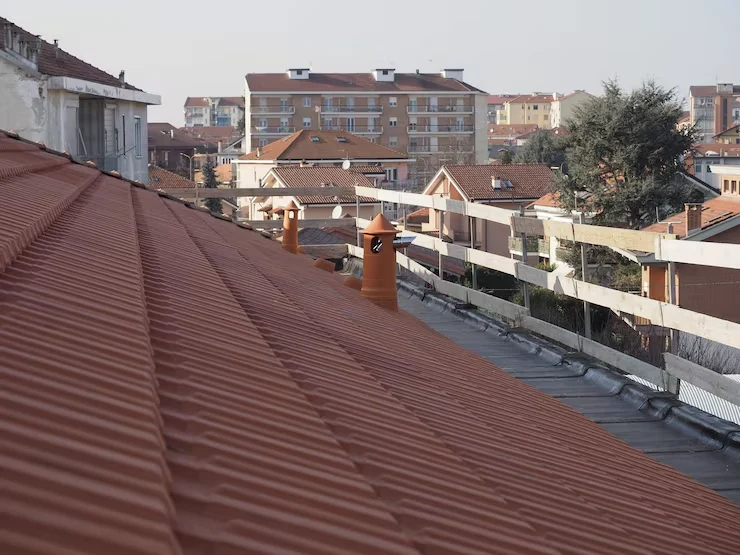
On a tile roof, the visible tiles and the underlayment beneath them are separate layers, and a repair can touch one or both. The amount of roof a job reaches is what matters for the 25% roof rule. A repair that lifts tiles to replace underlayment across a large area covers more roof than a tile swap.
That is why the scope of a tile roof job should be clear before work starts. Ask the contractor:
- Which layer is being repaired, the tiles, the underlayment, or both.
- How much area the work reaches, as a share of the whole roof.
Tile roof underlayment versus broken tiles explains how to tell which layer is failing. Diagnosis on a roof is work for a professional, not a ladder job for a homeowner. Confirm the permit and code questions with your local building department.
Grants, Permits and Roof Work
A grant program for roof work does not replace the permit law. Section 553.79 applies to the work itself, whoever pays for it. If a grant helps fund a roof job, the permit question still goes to the enforcing agency, and the code question still turns on the roof’s history and the share of roof being done.
The state’s grant program for home hardening has its own rules on eligibility and what it pays toward. The My Safe Florida Home grant for roof work explains how that program works and which roof items it covers.
A grant approval is not a building permit. Keep the grant documents, the permit and the final invoice in one file, and confirm with your local building department and the grant program before work begins.
Planning a Roof Replacement Under the Current Rules
Planning a roof replacement starts with three facts: when the roof was last done, which code it was built to, and how much of it now needs work. Those answers shape the permit question under section 553.79 and the 25% question under section 553.844(5). Gather them before you collect quotes.
A short planning order:
- Find the roof’s history from permit records and invoices.
- Get an inspection that reports which areas need work.
- Ask for written estimates that state the area covered and the permit plan.
- Call your insurer to ask how the work affects your policy.
- Confirm the permit with your local building department.
For full replacement work, the Roof Repair Lakeland FL page on roof replacement in Lakeland explains what that service covers. For hurricane deductibles, claim deadlines and roof age rules, see our guide to roof insurance and hurricanes in Florida. Confirm with your local building department and your insurer before any work starts.
Frequently Asked Questions
What is the 25% roof rule in Florida?
It is section 553.844(5) of the Florida Statutes. For a roof built, repaired or replaced to the 2007 Florida Building Code or later, when 25 percent or more is repaired, replaced or recovered, only that portion must meet the current code (Chapter 2022-269). For older roofs, ask your local building department.
What is the new law in Florida about roofs?
One change was Senate Bill 4-D in 2022, Chapter 2022-269, Laws of Florida, approved May 26, 2022. It added the 25% roof exception to section 553.844 and barred local amendments to it (Chapter 2022-269). Other roof laws exist, so confirm the current rules with your local building department and insurer.
What happens if you do a roof without a permit in Florida?
Section 553.79 makes it unlawful to repair or alter a building without first obtaining a permit from the appropriate enforcing agency, and that agency can revoke a permit for work that does not conform to the code (s. 553.79). Confirm with your local building department what it requires for your job.
Are you allowed to replace your own roof in Florida?
Florida’s owner-builder exemption, section 489.103(7), lets owners act as their own contractor on a one- or two-family home for their own use, if they directly supervise all work not done by licensed contractors. The home must not be offered for sale or lease, and a sale or lease within one year creates a presumption it was built for that (s. 489.103).
Do I need a permit to replace my roof myself in Florida?
Yes. Section 553.79 requires a permit before repair or alteration work, and the owner-builder exemption does not remove that step. Under section 489.103(7), the owner “must personally appear and sign the building permit application” (s. 489.103). Roof work is dangerous, so confirm the rules with your local building department first.