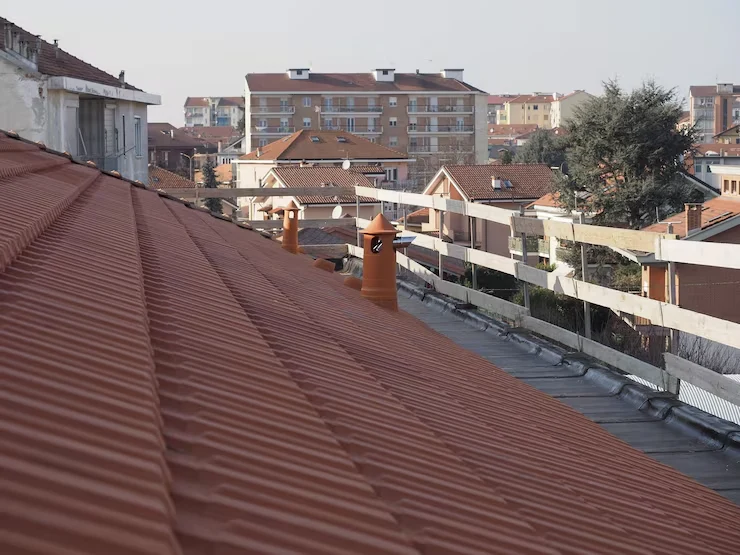
A flat or low-slope roof over a Lakeland porch, addition or carport takes full sun and heavy summer rain. A silicone roof coating is a liquid layer rolled or sprayed over that roof to seal and reflect. It can protect a sound roof, but it cannot rescue one that is wet or rotting underneath.
This guide explains what silicone coatings do well, their real downsides, what the Florida Building Code says about coatings, and how to judge whether your roof is a good candidate. The facts come from the code text, coating makers’ own data sheets and blogs, federal guidance from the Department of Energy and FEMA, and national cost figures from Fixr, each linked where it is used. For the wider picture of roof types, see our guide to roofing materials for Lakeland homes.
A Silicone Roof Coating Explained
A silicone roof coating is a liquid made mostly of silicone that cures into a seamless, rubbery skin over an existing low-slope roof. It goes on in one or more coats at a set thickness, usually in white, and bonds to the old surface. It is a protective layer, not a new roof covering on its own.
The Florida Building Code treats roof coatings as their own category. Section 1509 says the installation of a roof coating on a roof covering must follow Section 1505 and the rest of 1509, and Table 1509.2 lists the material standard for each type. Silicone coating must meet ASTM D6694 (Florida Building Code 2023, Chapter 15).
The same table lists other coating families, which is useful when comparing quotes:
| Coating type in Table 1509.2 | Standard named in the code |
|---|---|
| Acrylic coating | ASTM D6083 |
| Asphaltic emulsion coating | ASTM D1227 |
| Asphalt coating | ASTM D2823 |
| Asphalt roof coating | ASTM D4479 |
| Aluminum-pigmented asphalt coating | ASTM D2824 |
| Silicone coating | ASTM D6694 |
| Moisture-cured polyurethane coating | ASTM D6947 |
A quote that names the product should let you check which standard it meets. Your local building department decides how the code applies to a given job.
Roofs That Suit a Silicone Coating
Coatings are made for low-slope roofs: the flat sections over porches, carports, additions and some older rooms. The Department of Energy defines a low-slope roof as a pitch of 2 in 12 or less, and lists elastomeric coatings among the cool products made for that kind of roof.
The DOE Guide to Cool Roofs names cool thermoplastic membranes, elastomeric coatings and metal products as the cool options for low-slope roofs, and shingle, tile and metal for steep roofs. A shingle or tile roof on the main house is not where a silicone coating belongs.
Coating makers list which existing surfaces their silicone can go over. Gaco’s coverage sheet for its GacoFlex silicone coatings covers single-ply membranes, metal roofs, smooth modified bitumen or built-up roofs, granulated modified bitumen (including mineral-surfaced cap sheets) and spray foam (Gaco, GW-5-1 coverage rates). The same sheet carries limits that matter:
- Asphalt roofs. Only white coatings are permitted over asphalt-based roofs, and some products need a primer or a base coat first.
- SBS modified bitumen. Some Gaco products are not meant for SBS roofs at all.
- Cleaning. Asphalt roofs must not be pressure washed before coating.
Mobile homes are a separate case with their own roofs and rules. Our post on mobile home roof over, coating or replacement covers that choice.
Problems a Coating Can Fix and Problems It Cannot
A coating seals small cracks, worn surfaces and tired seams on a roof that is still dry and firmly attached. It cannot dry out a soaked deck, fix rotten wood, reattach loose roofing or stop a leak that starts at a failed wall flashing. Those problems have to be repaired before any coating goes on.
The Florida Building Code points the same way for any layer added over an old roof. Section 1511.3 requires the old roof to come off when it is water soaked or so deteriorated that it is not a good base, when it already has two or more coverings, or when blisters exist unless they are cut or scraped open and the rest secured first (Florida Building Code 2023, Chapter 15). One exception allows a new protective coating over an existing spray foam roof without tear-off.
| Roof condition | Coating alone | What usually comes first |
|---|---|---|
| Dry roof, chalky or worn surface | A good candidate | Cleaning and prep to the maker’s instructions |
| Small cracks or tired seams | Often a candidate | Seam and crack repair with matched sealant |
| Blisters | Not until treated | Blisters cut or scraped open and secured (1511.3) |
| Water-soaked or rotted roof or deck | No | Removal and repair of the wet material (1511.3) |
| Loose or peeling roof edges | No | Edge repair; FEMA notes low-slope roofs often fail at the edges in high wind |
FEMA’s fact sheet on low-slope roofs says these roofs often fail at the edges in high winds, when metal edge flashings, copings or fascia covers lift and peel (FEMA P-2181 Fact Sheet 3.3.2). A coating over a loose edge leaves that weak point in place.
For the repairs that come before a coating, such as ponding, seams and blisters, see our post on flat roof repair in Lakeland.
Silicone Coating Strengths in the Florida Sun
Silicone’s main strengths are how it stands up to standing water and to sun. Coating makers describe it as holding up better than acrylic where water ponds, and as reflecting sunlight that would otherwise heat the roof. A white coating can also turn a dark flat roof into a cool roof.
Polyglass, a coating maker, says acrylic coatings’ “resistance to ponding water is not as robust as silicone,” and that silicone coatings protect from damaging UV exposure (Polyglass, silicone roof coatings pros and cons). It also says a silicone system can be much cheaper than a full replacement. Those are a manufacturer’s claims about its own product category, so ask for the specific product’s data sheet and warranty.
The DOE guide adds the energy side. It says cool roof savings vary and are greatest in hot and warm climates, and that cool versions of some roofing materials may need a reflective surface coating that adds about $1 per square foot to the installed cost (DOE Guide to Cool Roofs). It also warns that it is rarely economical to replace a mechanically sound roof just to make it more reflective.
The Downsides of Silicone Roof Coatings
Silicone has four drawbacks that coating makers state themselves: it picks up dirt, it gets slippery when wet, it can tear without reinforcement, and recoating it later is limited. None of these rules it out, but each one affects upkeep, safety on the roof and the next repair.
| Downside | What the maker says | Source |
|---|---|---|
| Dirt pickup | Dirt retention is one of the product’s limitations, and it reduces reflectivity | CertainTeed |
| Slippery when wet | Silicone is slippery, especially when wet; granules reduce the hazard | CertainTeed |
| Tearing | Can be subject to tearing; fabric reinforcement can be added | Polyglass |
| Recoating | Not all silicone products bond well to one another, so adhesion tests are advised | Polyglass |
CertainTeed recommends broadcasting roofing granules over the final coat to help with dirt and slipping. Gaco sells silicone walkway pads for areas people walk on, and its sheet says existing silicone coatings should not be primed before a new coat (Gaco coverage rates).
The slipping point is a safety issue as much as an upkeep one. A coated roof that is wet with rain or dew is no place for a homeowner. Leave cleaning, inspection and recoating to a roofer with proper fall protection.
The Amount of Coating a Roof Needs
Coverage is set by the product’s data sheet and the warranty length, not by a general rule. Makers give a rate in gallons per “square,” which is 100 square feet of roof, and a required dry thickness. Rough or weathered roofs, wind and waste all raise the amount needed on a real job.
Gaco’s sheet lists a rate of 1.5 gallons per square for a 10-year system with its S20 silicone over most roof types, and 1.25 gallons per square with its S42 series (Gaco coverage rates). At 1.5 gallons per square, simple arithmetic puts one 5-gallon pail at roughly 330 square feet before any waste. Gaco adds that rates are job specific and extra material may be needed for surface profile, overspray, wind, waste and coating left in the pail.
Thickness is the part that protects the roof. The data sheet sets the minimum thickness for each warranty length. When comparing quotes, ask each roofer for the product name, the gallons per square and the dry thickness they plan to apply.
Coating, Resurfacing or Replacing a Flat Roof
The right choice depends on how much life the roof has left and whether it is dry. A sound roof with surface wear can be coated or resealed. An old roof with widespread cracking may need resurfacing. A wet or failing roof needs repair or replacement before anything goes on top.
Fixr’s national cost guide gives these figures for flat roofs (Fixr flat roof repair cost):
| Option | Fixr national figure | When Fixr suggests it |
|---|---|---|
| Resealing | $400 to $1,250 | Budget for it every two to four years |
| Resurfacing | $250 to $1,500; a whole roof can reach $5,000 or more | Older roofs with blistering or alligatoring |
| Repair over replacement | When the roof has 50% or more of its life left |
Fixr puts the average life of a flat roof at about 15 to 30 years. These are national estimates published by Fixr, not local prices or this business’s pricing. A roofer should look at your roof before giving a price for a coating.
Ask your local building department whether a permit is needed, whether you live in Lakeland, Winter Haven or elsewhere in Polk County, before a coating job starts, and confirm any warranty terms with the product maker.
Getting a Low-Slope Roof Checked Before Coating
A coating is only as good as the roof under it, so the first step is an inspection by a roofer. The roofer checks for wet spots, soft decking, blisters, loose edges and ponding before recommending a coating. Stay off the roof yourself, especially after rain.
From the ground or from inside, you can note what you see and share it with the roofer:
- Ceiling stains under the flat section, with the date you first saw them.
- Water that stays on the roof for days after rain, if you can see it from a window.
- Loose or bent metal at the roof edges, visible from the yard.
- Earlier coatings or repairs, with any paperwork that names the product.
If water is coming through a ceiling, keep people away from the area and away from any wet light fixtures, and call a roofer. If water reaches electrical fittings, turn the power off at the panel only if it is safe to reach, or call the utility.
When you are ready to have a flat roof assessed, the Roof Repair Lakeland FL page on roof coating in Lakeland explains how a coating job is scoped.
Frequently Asked Questions
What are the downsides of using silicone roof coating?
Coating makers list four. CertainTeed names dirt retention, which cuts the roof’s reflectivity over time, and slipperiness when the surface is wet (CertainTeed). Polyglass adds possible tearing without fabric reinforcement and that not all silicone products bond to one another, so adhesion tests are advised (Polyglass).
How many square feet does a 5 gallon bucket of silicone roof coating cover?
It depends on the product. Gaco lists 1.5 gallons per 100 square feet for a 10-year system with its S20 silicone, which works out to roughly 330 square feet per 5-gallon pail before waste (Gaco coverage rates). Always follow the data sheet for the product used.
Does silicone roof coating come in different colors?
Some products do. Polyglass says its silicone coating comes in white and a gray (Polyglass), and CertainTeed suggests colored ceramic granules in the final coat (CertainTeed). Gaco’s sheet says only white coatings are permitted over asphalt roofs (Gaco).
Can you use silicone caulk on a roof?
Coating makers sell silicone sealants made for roof seams, such as Gaco’s SeamSeal products listed beside its roof coatings (Gaco). Whether a sealant suits your roof depends on the roof material, so leave the choice and the work to a roofer rather than climbing up yourself.
What is the best sealant for a roof leak?
No single sealant fits every roof. The Florida Building Code lists separate standards for silicone, acrylic, asphalt and polyurethane coatings in Table 1509.2 (Florida Building Code 2023, Chapter 15). A roofer should find the leak’s cause first, then pick a product rated for that roof.
What is the best permanent solution for a leaking roof?
Fixing the cause. The Florida Building Code requires removal where a roof is water soaked or deteriorated (Florida Building Code 2023, Chapter 15), and Fixr suggests repair over replacement when a flat roof has half or more of its life left (Fixr). A roofer and your building department decide which applies.