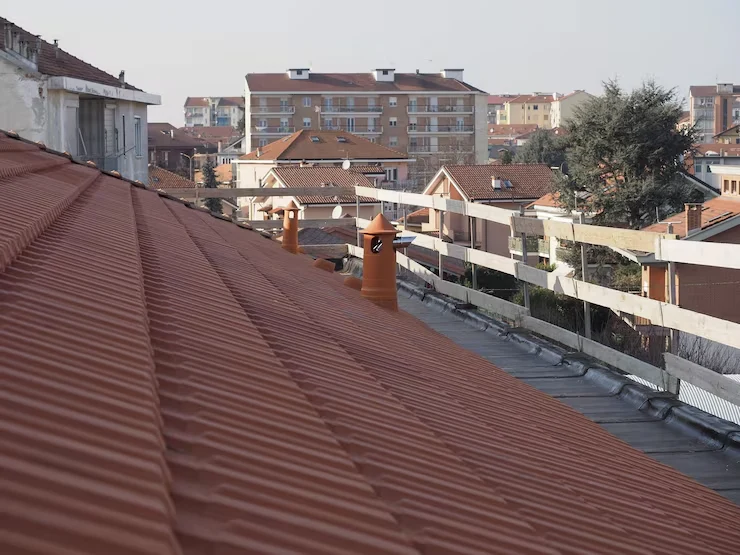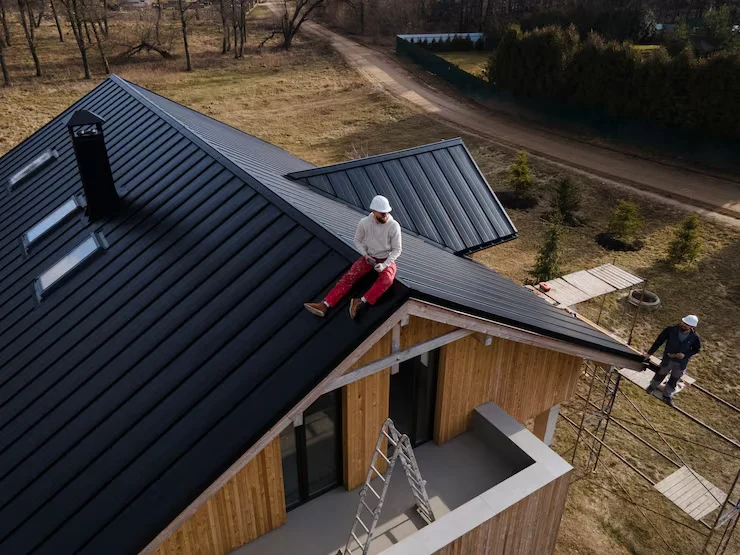
The fascia is the board along the edge of the roof that the gutters hang on, and the soffit is the panel that closes the underside of the overhang. When either one rots, cracks or pulls loose, fascia repair is usually a job on the roof edge alone, not a sign the whole roof has to come off.
Everything here comes from the Florida Building Code text, the 2023 Florida Residential Code, University of Florida wildlife guidance, the Florida Fish and Wildlife Conservation Commission (FWC) as reported, and the published cost guides linked in each section. For how the roof edge fits with the rest of the roof, see our guide to roofing materials for Lakeland homes.
The Jobs Fascia and Soffit Do on a Roof
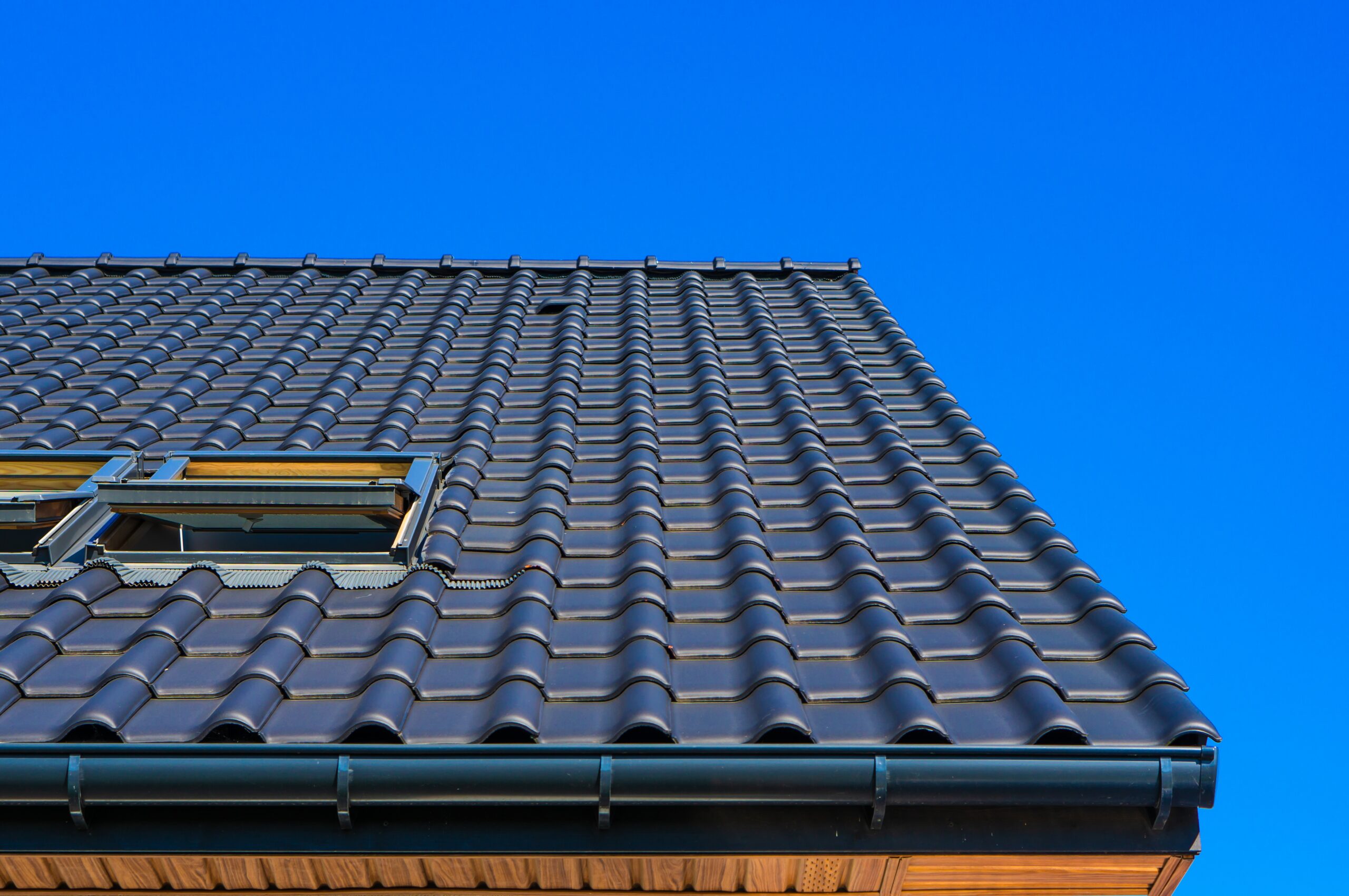
Fascia and soffit close off the roof overhang. The fascia runs along the outer edge and carries the gutters. The soffit covers the underside between that edge and the wall. Together they keep rain, wind and animals out of the rafter ends and the attic, and they give the eave its finished look.
This Old House describes fascia and soffits as the parts that “form the edges and undersides of your roof” (This Old House, fascia board replacement cost). Fixr’s guide puts the job of the fascia even more simply: “it’s what gutters fasten to” (Fixr, fascia board replacement guide).
| Part | Where it sits | Main job |
|---|---|---|
| Fascia | The vertical board along the roof edge | Holds the gutters and covers the rafter ends |
| Soffit | The flat panel under the overhang | Closes the gap between the roof edge and the wall |
| Drip edge | A metal strip at the edge of the roof deck | Sheds water past the fascia and into the gutter |
Signs of Fascia and Soffit Damage
Most fascia and soffit damage shows from the ground. Look for peeling or bubbling paint, dark wet patches, cracks, splits, holes, boards that bow outward, and gutters that sag or pull away. A soffit panel that hangs down or has a gap at the corner is another sign worth checking soon.
This Old House lists cracks, splits and holes as clear signs of bad fascia. It says peeling paint, mold, moss or wet spots call for a closer check, and that boards that are “rotting, warped, or unable to hold up the gutters” should be replaced (This Old House). Fixr’s guide also names wood rot, mold and cracks as the signs that mean the fascia may need replacing in whole or in part (Fixr guide).
Walk around the house and look at these points:
- Gutter line. A gutter that dips, leaks at the brackets or leans out from the house often means the board behind it is soft.
- Paint and stains. Paint that peels in one spot, or dark streaks below the gutter, point to water getting behind it.
- Soffit panels. Panels that sag, rattle or have pulled out of their channel leave an open path into the attic.
- Corners. Roof corners and the ends of the soffit are where gaps and loose pieces tend to show first.
Check from the yard or a window. Do not climb a ladder to push on the boards. A roofing professional can confirm how far the damage runs during an inspection.
Common Causes of Rotten Fascia
Water is the main cause of rotten fascia. Clogged gutters, too few downspouts, a missing or failed drip edge, and damaged shingles near the edge all let water soak the wood. Storms cause sudden damage in one spot, and animals can tear open a weak board or soffit to get inside.
Fixr’s guide names “insufficient downspouts, clogged gutters” as common causes. It also points to “malfunctioning drip edges that allow water to rot or grow mold on the fascia,” and to damaged roof shingles (Fixr guide). This Old House says moisture is the main concern with wood because it rots when wet. It adds that storms can cause damage in one area and that correct flashing helps keep water off wood boards (This Old House).
Gutters and the drip edge are the two parts that most often decide whether the fascia stays dry:
| Cause | How it reaches the fascia | Related guide |
|---|---|---|
| Clogged or sagging gutters | Water spills over the back of the gutter onto the board | Gutter repair in Lakeland |
| Missing or failed drip edge | Water runs down behind the gutter and soaks the board | Drip edge on Lakeland roofs |
| Damaged edge shingles | Rain gets under the first rows and into the deck edge | Roof repair |
| Storm damage | Wind or debris splits or pulls off a section | Roof repair |
If the cause is not fixed, a new board will rot in the same way.
Animals Getting In Through Soffits and Gaps
A gap in the soffit or a loose corner gives squirrels, raccoons, rats and bats a way into the attic. The fix is to find out which animal is using the gap, get it out legally, and only then close the opening. Bats are protected in Florida, so the order and the timing both matter.
The University of Florida’s nuisance wildlife overview sets out a four-step approach, starting with “Identify which species is responsible for the problem” and ending with checking whether the fix worked (UF/IFAS EDIS WEC323). The same page says homeowners may take most wild mammals that damage property, but not bats. It also says poison and steel traps cannot be used without a permit.
For bats, Spectrum News 13 reports FWC guidance that exclusion devices can be used without a permit from August 15 through April 15, outside bat maternity season. Blocking bats during that season is illegal. FWC says devices should be “left up for a minimum of four nights,” with overnight temperatures of 50 degrees or above (Spectrum News 13, FWC on bat exclusion).
The order of work:
- Find out what is living there. Call a licensed wildlife professional to identify the animal.
- Get the animal out legally. For bats, that means the FWC dates and methods above.
- Then repair the soffit and fascia. Closing the gap first can trap animals inside.
Confirm current rules with the FWC before any exclusion work. Do not reach into the soffit or go into the attic to look for animals yourself.
Florida Code Rules for Soffits, Fascia and the Roof Edge
Florida’s codes treat the roof edge as part of the storm defence. The building code sets how the drip edge is fastened and where downspouts drain. The residential code says soffits must meet the wind loads in the code and sets how vinyl and aluminum soffit and aluminum fascia are fastened.
Section 1507.2.9.3 of the 2023 Florida Building Code says to “Provide drip edge at eaves and gables of shingle roofs.” Eave drip edges must extend half an inch below the sheathing and at least 2 inches back onto the roof, go over the underlayment, and be fastened at most 12 inches apart, or 4 inches apart at higher design wind speeds or taller roofs (Florida Building Code 2023, Chapter 15). Section 1503.7 says downspouts must discharge at least 1 foot away from the wall, and that gutters with downspouts are required where eaves project less than 6 inches.
For soffits, a summary of the 2023 Florida Residential Code published by the vinyl siding industry gives these points (Polymeric Exteriors, Florida codes):
| Code section | What the summary says |
|---|---|
| R301.9 | Cladding and soffit must meet the wind loads in the code |
| R704.2.1 | Vinyl and aluminum soffit panels are fastened at both the wall and the subfascia |
| R704.2.1 | Spans over 12 inches need extra nailer strips |
| R704.3 | Aluminum fascia is installed by a method set by design wind pressure, and above 60 psf it wraps the soffit corners |
Your local building department decides which rules apply to your address and whether the work needs a permit.
Fixing Fascia Without Replacing the Roof
Fascia can usually be repaired or replaced without a new roof. The gutters, brackets and drip edge come off, the bad board is cut out or replaced, the rafter ends behind it are checked, and the edge is rebuilt. The roof only becomes part of the job if the deck edge, rafters or shingles are damaged.
Fixr’s guide describes the start of the job: “Unscrew your gutters, gutter brackets, and drip edge as they rest on the fascia,” and notes the gutters can be reused if they are in good shape (Fixr guide). It says the soffit boards come off to give a clear view beneath the overhang. The guide does not call for a new roof. It notes that repairing roof framing and shingles is sometimes needed alongside the fascia, and that this work “typically calls for the expertise of a roofing contractor.”
The usual sequence:
- Remove what hangs on the board. Gutters, brackets and drip edge come off, with care so long runs do not bend.
- Open the soffit. This shows the rafter tails and the deck edge.
- Check for hidden rot. Soft rafter ends or deck edge get repaired before new boards go up.
- Install new fascia and soffit. Panels are fastened to the code points above.
- Refit the drip edge and gutters. The drip edge laps over the underlayment and the gutter sits under it.
This Old House says damage in one area, such as from a storm, may need only part of the fascia replaced, while widespread damage may call for full replacement. It also suggests doing fascia, drip edges and gutters together to save on labor (This Old House). Because this is ladder work at the roof edge, leave it to a professional.
Fascia and Soffit Materials Compared
Fascia is made in wood, PVC, vinyl, aluminum, fiber cement and composite. Wood is the cheapest to buy but rots when it stays wet. PVC, vinyl and aluminum do not rot, and aluminum is also used as a wrap over a wood board. Price per foot rises from wood to aluminum in the published figures.
This Old House lists these national material prices per linear foot for fascia (This Old House). These are national estimates published by This Old House, not prices from this business.
| Material | Material price per linear foot | Notes |
|---|---|---|
| Wood | $1 to $3 | Rots when wet, per This Old House |
| Fiber cement | $1 to $5 | |
| Composite | $1 to $8 | |
| PVC | $3 to $7 | |
| Vinyl | $5 to $9 | |
| Aluminum | $8 to $20 | Fastening set by R704.3 in the residential code |
Fixr’s guide mentions lumber, PVC and aluminum fascia and says a fascia board measures three quarters of an inch in most cases (Fixr guide).
The Cost of Fascia Repair
Published national figures put fascia replacement at $7 to $40 per linear foot for materials and labor. This Old House estimates a typical single-story home has about 250 linear feet, for $1,750 to $10,000 in total. It lists fascia or soffit repair at $10 per linear foot. These are national market figures, not local quotes.
This Old House’s breakdown, based on HomeAdvisor and Angi data (This Old House, fascia board replacement cost):
| Item | National figure |
|---|---|
| Fascia replacement, materials and labor | $7 to $40 per linear foot |
| Typical single-story home, about 250 linear feet | $1,750 to $10,000 |
| Fascia labor | $6 to $20 per linear foot |
| Removing old fascia | $3 to $7 per linear foot |
| Fascia or soffit repair | $10 per linear foot |
The biggest swing factors are how many feet need work, the material, and whether rot has spread into the rafter ends or deck edge. This Old House notes that many owners replace soffit and fascia together, and that soffit replacement generally costs more. Ask for a written estimate that lists the length, the material and what happens if hidden rot turns up once the board is off.
Getting Fascia and Soffit Damage Checked in Lakeland
A soft fascia board or open soffit is worth checking before the next summer storm or hurricane season. An inspection looks at the board, the rafter ends, the drip edge, the gutters and the shingles at the edge, so the repair fixes the water source and not only the wood you can see.
Heavy rain and storm winds put the most strain on the roof edge, and a loose soffit panel is an easy entry for wind and water. Have the edge checked from Lakeland to Winter Haven, Bartow and the rest of Polk County before a small soft spot spreads.
When you are ready to have the edge looked at, the Roof Repair Lakeland FL page on roof repair in Lakeland explains what a repair visit covers.
Frequently Asked Questions
Can you repair damaged fascia?
Yes. Damage in one area, such as from a storm, may need only that section of fascia replaced, while widespread rot may call for full replacement, according to This Old House. The cause, such as clogged gutters or a failed drip edge, should be fixed at the same time so the new board stays dry.
What is the average cost to replace fascia?
This Old House puts fascia replacement at $7 to $40 per linear foot for materials and labor, or $1,750 to $10,000 for a typical single-story home of about 250 linear feet, based on HomeAdvisor and Angi data (This Old House). These are national market figures, not local quotes, so get a written estimate for your home.
Can you replace fascia without replacing the roof?
Usually, yes. The gutters, brackets and drip edge are taken off, the fascia is replaced, and they go back on, as Fixr’s fascia guide describes. Roof work is only added if the rafter ends, deck edge or shingles are damaged, and Fixr says that work typically calls for a roofing contractor.
Is it legal to seal bats out of a soffit in Florida?
Only at the right time and in the right way. FWC guidance reported by Spectrum News 13 says exclusion devices may be used without a permit from August 15 through April 15, left up at least four nights, with overnight temperatures of 50 degrees or above. Confirm current rules with the FWC first.