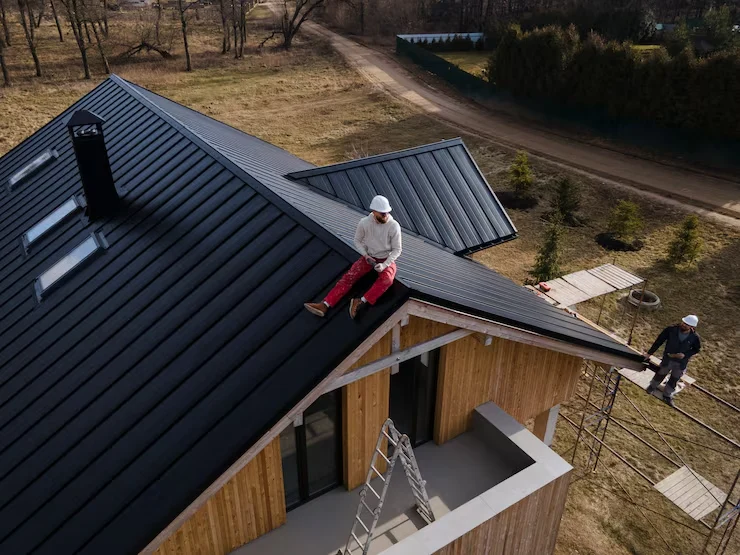
A storm passes, the yard is littered with ice, and the roof looks fine from the driveway. Hail damage on roof surfaces is easy to miss from the ground, because some of the clearest signs are soft spots and lost granules rather than holes. This guide shows what hail leaves behind on shingle, tile and metal roofs, what only looks like hail, and what to do next.
Nobody in the household needs to climb a ladder to use it. Everything below is either something you can see from the ground or something a professional checks on the roof. Wind damage after the same storm is a separate subject, covered in our post on storm damage after hail, wind and heavy rain.
Hail Size and Roof Damage
NOAA treats hail of one inch across or larger as severe. Its Storm Prediction Center calls a thunderstorm severe when it produces hail at least one inch in diameter, and significant severe at two inches or more. Larger stones fall faster, so they strike a roof with more force and more chance of harm.
The Storm Prediction Center FAQ sets those two thresholds. The National Severe Storms Laboratory describes severe hail as “quarter size or larger” and lists the speeds that hail of each size reaches as it falls (NOAA NSSL):
| Hail size | Expected fall speed (NSSL) |
|---|---|
| Under 1 inch | 9 to 25 mph |
| 1 to 1.75 inches | 25 to 40 mph |
| 2 to 4 inches | 44 to 72 mph |
| Over 4 inches | can exceed 100 mph |
NSSL also notes that hail “can damage aircraft, homes and cars,” and that wind-driven hail can break through siding and vehicle windows. None of the sources fetched for this post gives a single hail size below which a roof is always safe. Age, material and the angle of the strike all play a part, which is why a professional look after a storm with large hail is worth booking.
Hail Reports in Polk County From 2015 to 2024
Federal storm records list 28 hail reports in Polk County from 2015 through 2024, and 23 of them were one inch or larger, the severe threshold the Storm Prediction Center uses. The largest stone recorded was two inches, near Davenport on 15 May 2022. Two years in that span had no reports.
These counts come from the NOAA NCEI Storm Events Database, filtered to hail events in Polk County, Florida. By year: 4, 9, 2, 1, 0, 1, 0, 4, 5 and 2. Stones of 1.75 inches were reported in 2016, 2023 and 2024, including near Lake Alfred on 26 April 2023. The database records reports, so a storm nobody reported does not appear.
Hail Damage on Asphalt Shingles
On asphalt shingles, hail leaves a random scatter of impact marks, dark spots where granules were knocked off, soft bruised areas and cracks. The Insurance Institute for Business and Home Safety (IBHS) points to ridge caps as especially exposed on shingle roofs. The pattern is scattered rather than lined up along edges or seams.
IBHS lists these signs of genuine hail damage on shingles (IBHS, Is it hail damage):
- Random pattern. Impact marks spread across the shingles with no regular layout.
- Bruising. Soft spots you can feel when pressing on the shingle.
- Cracks or breaks. Splits in the shingle where a stone struck.
- Ridge caps. The shingles along the peak of the roof take hits first.
Progressive’s consumer guide describes hail-damaged shingles as having “dark spots, divots, and granules that may have been knocked off,” and warns that loose, sand-like granules are a sign to watch for (Progressive). Granules protect the asphalt underneath, so a bare patch is more than a cosmetic mark.
IBHS also runs research on water leakage in shingles with hail damage, listed on its hail research page. The practical point for a homeowner is simple. A shingle that took a hit can let water through later, even if no drip shows up the week of the storm.
Hail Damage on Tile Roofs
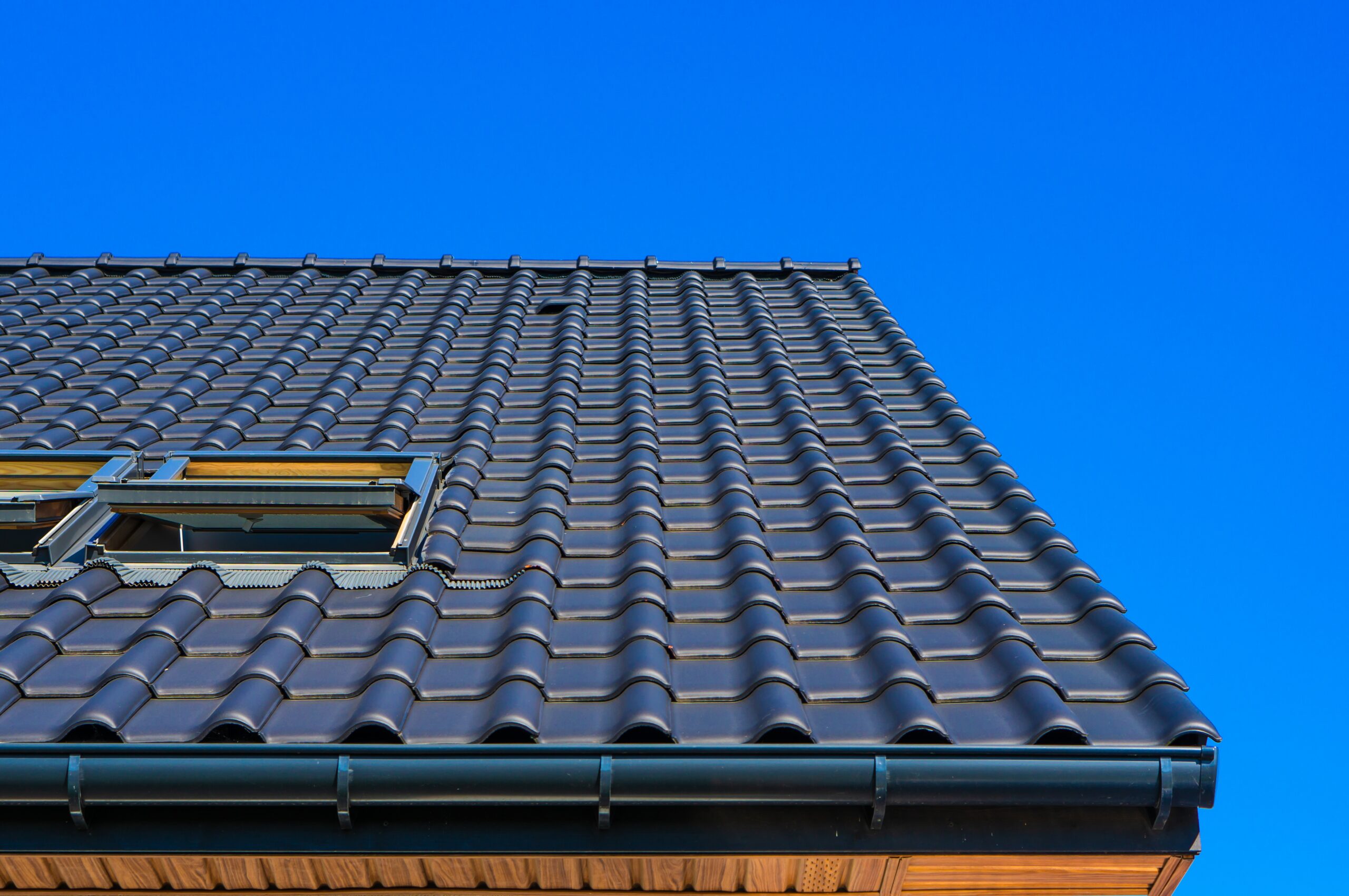
Tile roofs show hail as cracked, chipped or broken tiles, and sometimes punctures or dents. On tiles that carry a granule coating, granule loss appears too. Progressive notes that large hailstones can crack or break individual tiles, which can lead to roof leaks. A broken tile is often visible only from above.
Progressive’s guide lists “punctured holes, chips, and dents” on the surface, plus granule loss on coated tiles (Progressive). Progressive links cracked or broken tiles directly to roof leaks.
Do not walk on a tile roof to check. Tiles can break under foot, which turns one storm problem into two. From the ground, look for pieces of tile in the yard or gutters, and for gaps in an otherwise even row. Anything more needs a roofer with the right equipment.
Hail Damage on Metal Roofs
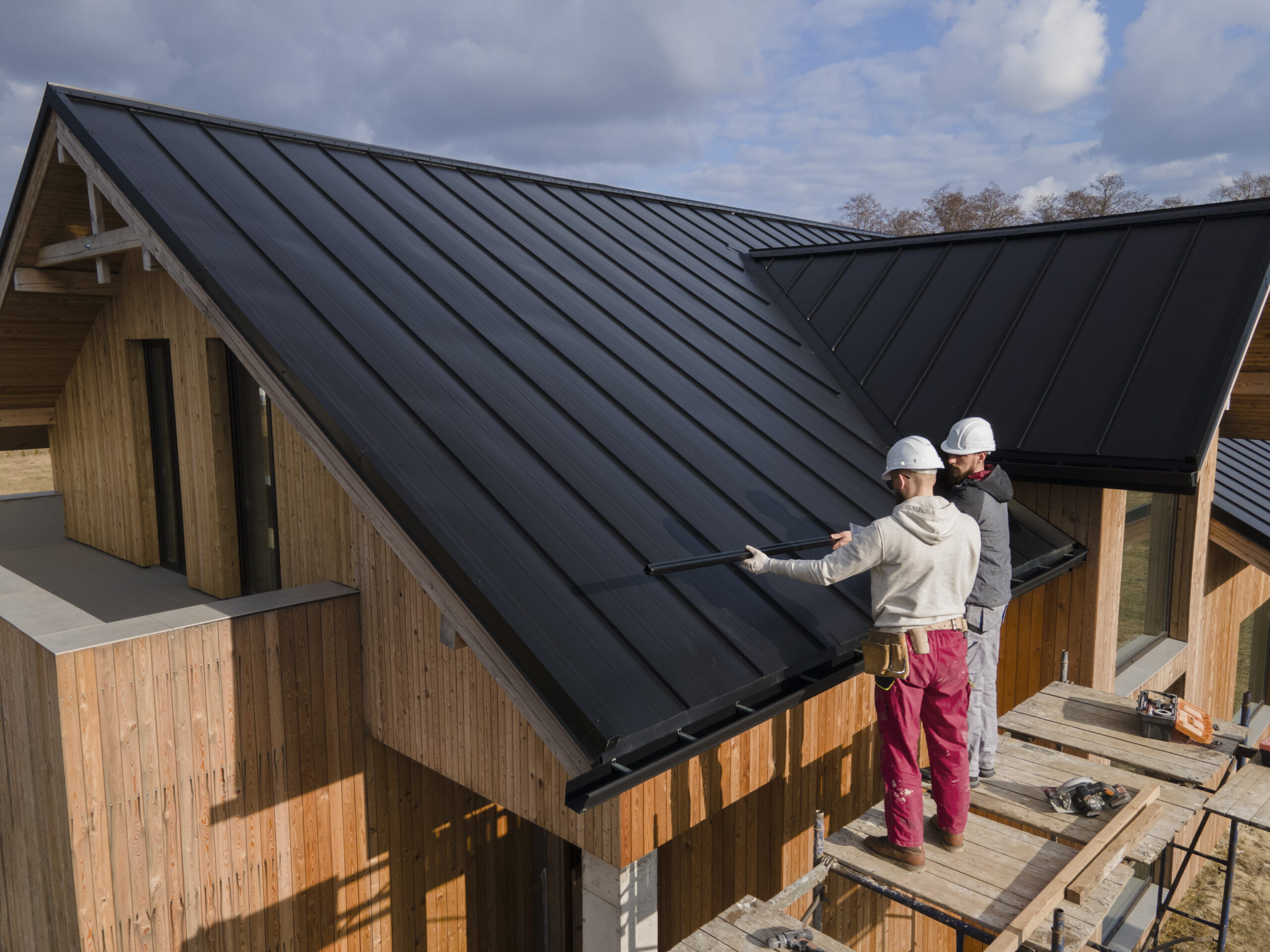
Metal roofs show hail as dents, dings and damage to the paint or coating. Progressive warns that coating damage can lead to rust, and that hail can also harm seams and loosen fasteners, which can let water in. A dent alone may look minor, but a broken coating or loose fastener is a leak risk.
The signs to look for on metal, from Progressive’s guide:
- Dents or depressions in the metal surface.
- Chipped or scratched paint and coating, which can lead to rust.
- Seam damage where panels meet.
- Loose fasteners, which can open a path for water.
Coating damage, seam damage and loose fasteners are small details that need a close look from a professional. IBHS lists low-slope metal roofing among the materials its hail research studies (IBHS).
Hail Damage Compared With Blistering and Normal Wear
Hail marks are random and scattered. Blistering, weathering and wear tend to follow a pattern. IBHS says granule loss along shingle edges is normal weathering, and that even, uniform wear or discoloration is not hail. Installation scuffs, tool marks, manufacturer defects and heavy rain can also strip granules.
IBHS sets out the look-alikes on its Is it hail damage page. The table puts them side by side:
| What you see | Points to hail | Points to something else |
|---|---|---|
| Pattern of marks | Random, scattered impacts | Uniform wear or discoloration |
| Granule loss | Dark spots at impact points | Loss along shingle edges (normal weathering) |
| Feel of the shingle | Soft, bruised spots | Firm shingle with surface wear only |
| Scuffs or scrapes | Not typical | Installation or tool marks |
| Other surfaces | Dents on gutters, A/C units, vents | No matching marks anywhere else |
The last row matters most. IBHS calls it collateral evidence: spatter marks or dents on items like A/C units, gutters, metal flashing, downspouts and patio furniture. If those surfaces show fresh marks after a storm, a hail event is far more likely than plain ageing. If they are clean, the roof marks may have another cause.
The difference matters for the next step. Blistering and edge wear point toward a roof that is ageing and may need a repair plan. Hail impacts point toward a storm event, which is a different conversation with your insurer.
Hail Damage on Roof Surfaces Is Hard to See From the Ground
Hail damage is hard to see from the ground because the key signs are small and close to the surface. Bruising is felt by pressing, not seen. Granule loss shows as dark spots that look like shadows from below. A cracked tile or a loose fastener on metal can sit behind a ridge or valley and stay hidden.
The bruising sign on the IBHS list is described as soft spots “you can feel when pressing on the shingle” (IBHS). No one can feel a shingle from the lawn. That is the main reason a roof can look fine from the driveway after hail and still have damage on it.
Pitch and height make this worse. On a two-storey home, the upper roof planes may not be visible at all from the ground. Ridge caps, which IBHS names as especially vulnerable, sit at the highest point and are viewed edge-on from below.
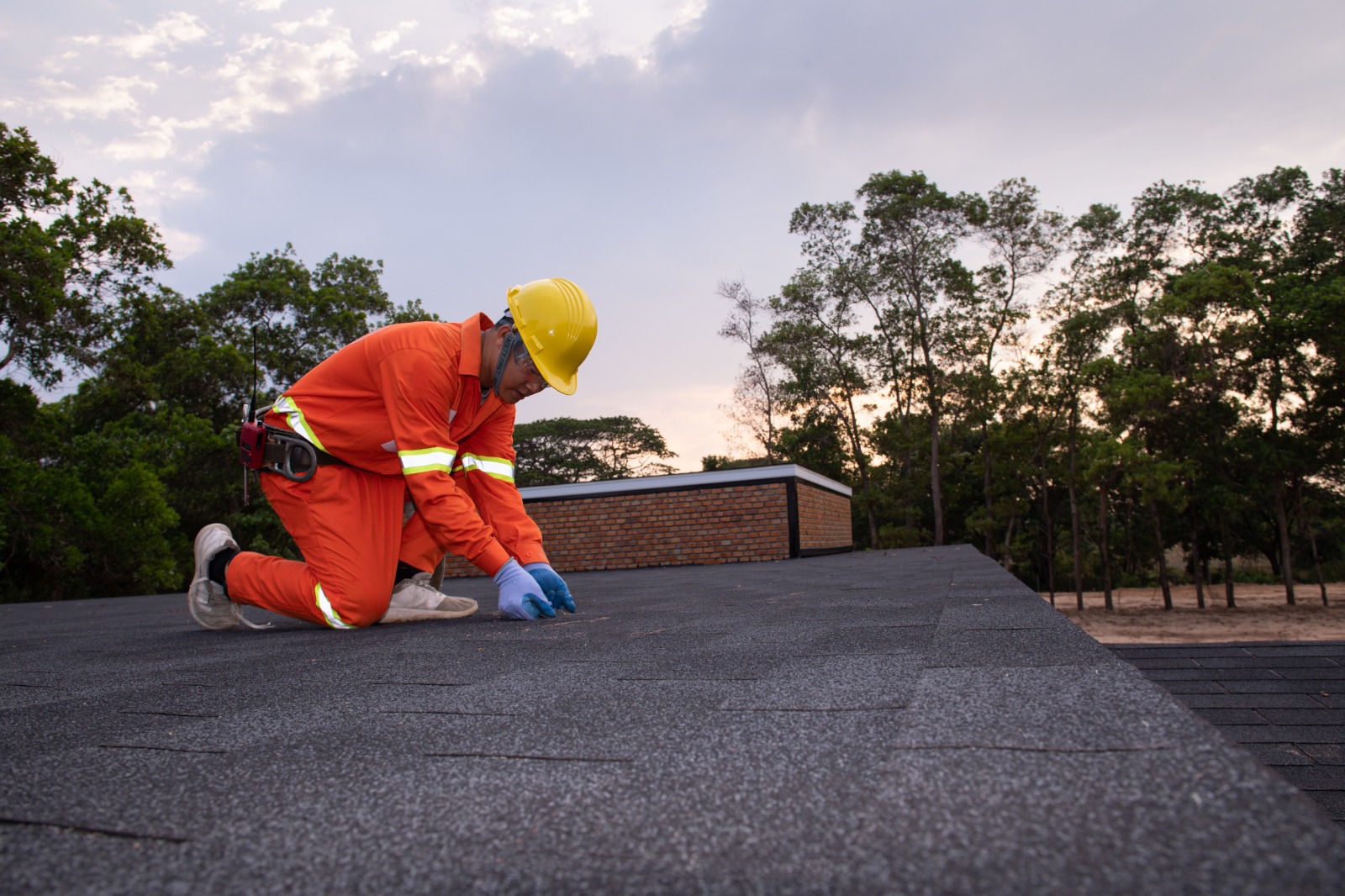
Climbing up to check is not the answer. A wet or hail-strewn roof is slippery, tiles break under foot, and soft spots are hard to judge without training. Leave the roof surface to a professional.
Ground-Level Checks You Can Make Safely
You can gather useful evidence after hail without leaving the ground. Look at gutters, downspouts, the A/C unit, patio furniture and anything metal around the house for fresh dents or spatter marks. Check the gutters and downspout outlets for heavy granule build-up. Photograph everything with the date before anything is moved.
These checks follow the collateral evidence IBHS describes, plus the granule and gutter signs Progressive lists (Progressive):
- Walk the outside of the house. Look for dents in gutters, downspouts and A/C unit fins.
- Check soft metal. Vents, flashing you can see from the ground and metal furniture show marks clearly.
- Look at the downspout outlets. A pile of granules that looks like coarse sand is a clue.
- Scan the yard. Pieces of shingle or tile on the ground point to damage above.
- Look indoors from inside the rooms. Check ceilings for new stains. Do not go into the attic during a storm.
- Photograph and date everything. Include a ruler or coin beside a hailstone if you can, before the ice melts.
If you find water coming in, the steps for leaks and stains are in our guide to roof leaks in Lakeland. If a section of roof is open to the weather, our post on using a roof tarp after a storm explains why tarping is a job for a professional.
Next Steps After a Hailstorm
After a hailstorm, record what you can see from the ground, then book a professional roof inspection. Progressive advises contacting a professional promptly, because acting early may prevent water leaks and further damage inside the home. Keep your photos, dates and any hailstone measurements together in one place for the insurer and the roofer.
A short order of steps:
- Stay off the roof. Use ground checks only.
- Document the storm. Photos of hail, dents and granules, with dates.
- Book an inspection. A roofer checks for bruising, cracks and coating damage up close.
- Ask for a written report with photos of each impact the roofer finds.
- Contact your insurer with the report and your own photos.
A roofer who knocks on the door right after a storm is not a reason to sign anything that day. Our post on checking a roofing contractor in Florida explains how to look up a licence before any work starts.
For a professional look after hail, the Roof Repair Lakeland FL page on storm damage roof services in Lakeland explains what the inspection and repair visit covers.
Hail Damage and Your Insurance Claim
Progressive says dwelling coverage may pay for hail repairs, minus your deductible. It explains that a Replacement Cost Value endorsement covers full replacement, while Actual Cash Value covers the depreciated value. Which one applies depends on your policy. Read your declarations page and confirm with your insurer before any work begins.
Those terms come from Progressive’s guide, and they are general. Each policy sets its own deductible, exclusions and claim steps. Florida law also sets deadlines for giving notice of a claim. Our post on whether homeowners insurance covers a roof leak in Florida sets out what state law says about claim timing. For your own policy, confirm with your insurer.
The documentation from the steps above helps either way. Dated photos of dented gutters and granule piles are the same collateral evidence IBHS uses to tell hail from wear. A roofer’s report adds the close-up detail no one can capture from the ground.
Hail-Resistant Shingles and Roof Choices
Shingles sold as impact resistant do not all perform the same in hail. IBHS buys shingles from retail stores, fires simulated hailstones at them with a pressurized cannon, and publishes ratings that compare dents, tears and granule loss by product. The ratings are free to check before choosing a roof.
IBHS states that “not all ‘impact-resistant’ asphalt shingles perform the same,” and its ratings tool lets you compare products by overall score or by year (IBHS shingle ratings). If a hailstorm leaves your roof needing replacement, that page is worth reading before you agree on a product.
IBHS also runs a Roof Aging Farm that studies how time, temperature and storms affect roofs (IBHS). The useful lesson for homeowners is that a roof’s response to hail is tied to its age and condition, not to the storm alone.
Frequently Asked Questions
What size hail damages roofs?
No source fetched for this post names a single size that always damages a roof. The Storm Prediction Center calls hail of one inch or more severe, and two inches or more significant severe (SPC FAQ). Larger stones fall faster, according to NSSL, so book an inspection after any storm with large hail.
How long will a roof last after hail damage?
None of the sources fetched gives a figure. IBHS studies water leakage in hail-damaged shingles and how storms affect roof aging (IBHS), and Progressive notes that cracked tiles and coating damage can lead to leaks and rust. A roofer’s inspection is the way to judge your roof’s remaining life.
Can hail dents be popped out?
No source fetched for this post covers removing hail dents from a roof. Progressive notes that dents on metal roofs can come with coating damage that leads to rust, and loose fasteners that let water in (Progressive). Ask a roofing professional to inspect the panels and coating.
What does hail damage look like on a roof?
On shingles, IBHS lists random impact marks, soft bruised spots and cracks, with ridge caps especially exposed (IBHS). Tile shows cracks, chips and breaks, and metal shows dents and coating damage, according to Progressive. Dents on gutters, A/C units and downspouts help confirm a hail event.
What is the difference between roof blistering and hail damage?
Hail marks are random and scattered, often with matching dents on gutters or A/C units. IBHS says granule loss along shingle edges is normal weathering, and uniform wear or discoloration is not hail (IBHS). A roofer can tell them apart up close.